


A bridge is usually designed to stay put. Renfrew Bridge in Scotland had a different job. Its 184-m-long steel structure had to carry traffic across the River Clyde and, when required, swing open to keep the waterway moving. That simple requirement shaped almost every decision behind the bridge.
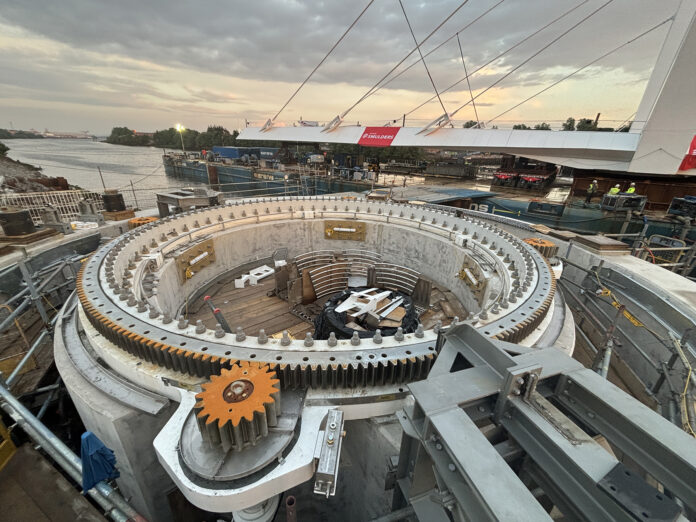
The double-leaf swing bridge uses a cable-stayed steel superstructure with an orthotropic steel deck. But the real story is not simply the amount of steel used; it is how carefully the weight of that steel was managed. For a movable bridge, every tonne matters. A heavier span needs a heavier counterweight and places greater demands on the machinery that rotates it.
The design team therefore went back to the geometry and looked for ways to make the structure leaner. The deck arrangement was simplified, the original skew was reduced, and the number of cable stays was brought down from 22 to 12 per leaf. The result was a lighter steel span that was easier to fabricate and placed less demand on the bridge’s moving system.
Technology played an equally important role behind the scenes. The steelwork and mechanical components were developed extensively in 3D, allowing the teams to coordinate the complicated deck, stays and moving parts before fabrication began. This was particularly valuable because the bridge components were being designed and fabricated across several countries.
Then came the move itself. Both steel leaves were largely completed in fabrication yards, including welding, painting and much of the mechanical installation, before travelling by barge and self-propelled transporters to the River Clyde.
Renfrew Bridge is a good reminder that steel efficiency is not only about using less material. Sometimes, getting the steel exactly right can make the entire structure, from its mechanics to its fabrication and installation, work smarter.