
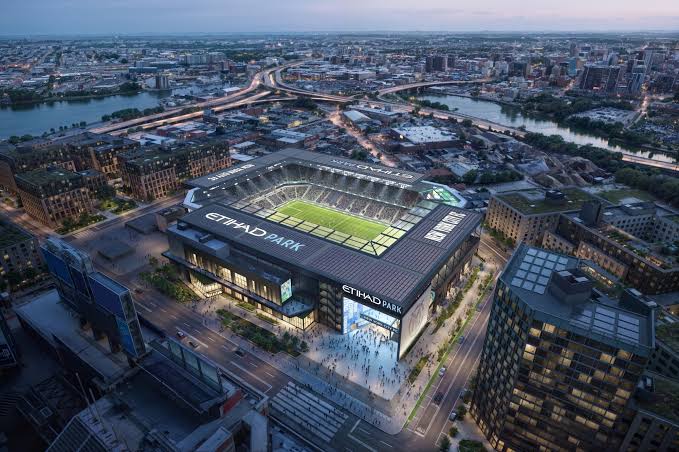
New York City FC is about to have a home that is distinctly its own. Opening for the 2027–28 MLS season, Etihad Park will bring a 25,000-seat soccer-specific stadium to Willets Point, Queens, marking a major new addition to New York’s sports landscape.
Designed by HOK, the privately financed $780 million stadium is being developed as part of a larger 23-acre neighbourhood transformation. Yet, within the stadium itself, one of the most telling design choices looks back to Willets Point’s industrial past: brick and black structural steel form part of the architectural palette, giving the new venue a material connection to its surroundings.
Steel is not simply a visual reference here. It contributes to the stadium’s distinctive architectural character, working alongside the brick elements to create a robust industrial expression. Rather than disguising the structure behind a highly polished exterior, the design uses materiality to acknowledge the identity of the neighbourhood while giving the stadium a contemporary presence.
The stadium’s intimate bowl is designed to bring fans close to the pitch, creating the atmosphere expected of a dedicated football venue while allowing the space to adapt for concerts and other events. At the main entrance on 126th Street, The Cube, a seven-storey gateway wrapped in 11,000 sq ft of programmable LED screens, creates a strong urban marker.
Beyond match days, Paze City Square will provide space for markets, festivals and community programmes, helping the stadium function as part of the neighbourhood rather than as an isolated sports venue.
The project also places considerable emphasis on sustainability. Etihad Park is planned to become New York City’s first fully electric sports stadium and MLS’s first fully electric venue, with a roof-mounted solar array, rainwater harvesting and locally sourced materials. The elevated site also helps address flood risk.
As part of the wider Willets Point development, Etihad Park represents more than a new football ground. Its combination of steel, industrial references, public spaces and performance-driven design gives New York a stadium that looks forward without losing sight of where it stands.