

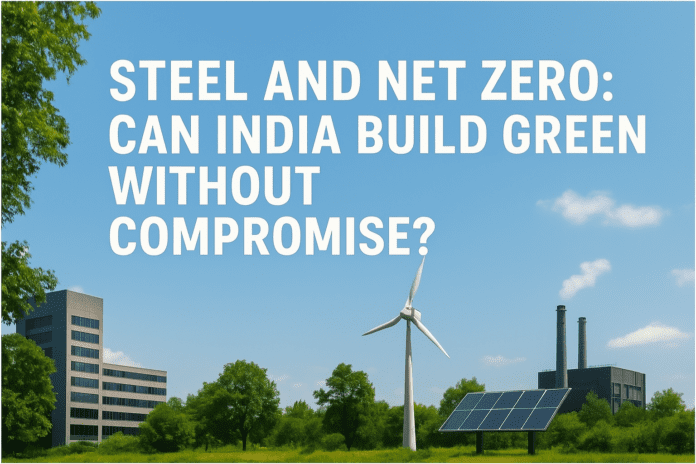
India’s steel sector stands at a pivotal crossroads. As the nation accelerates its infrastructure ambitions, the demand for steel is projected to surge, potentially reaching 275 million tonnes by FY34. However, this growth trajectory raises a critical question: Can India achieve its infrastructure goals without compromising its climate commitments?
The Carbon Conundrum
Steel production is among the most energy-intensive processes globally, and India, being the world’s second-largest producer, faces significant challenges. The predominant method, the Blast Furnace–Basic Oxygen Furnace (BF-BOF) route, relies heavily on coal, making the Indian steel industry one of the most carbon-intensive in the world. In FY25, India’s steel sector emitted approximately 2.65 tonnes of CO₂ per tonne of steel produced, surpassing the global average by over 20 per cent.
Government’s Green Steel Mission
Recognising the urgency, the Indian government is spearheading initiatives to decarbonise the steel industry. A notable step is the proposed ₹5,000 crore National Mission for Sustainable Steel Production. This mission aims to:
- Promote green steel technologies: Encouraging the adoption of Electric Arc Furnaces (EAFs) and Direct Reduced Iron (DRI) methods.
- Enhance scrap utilisation: Increasing the use of recycled materials to reduce dependency on virgin resources.
- Integrate renewable energy: Shifting towards solar and wind energy sources to power steel production processes.
- Provide financial support: Offering concessional loans and risk guarantees to facilitate the transition.
Industry’s Commitment
Leading steel producers are aligning with the government’s vision. Tata Steel and JSW Steel have pledged to reduce their carbon emissions by 30–50 per cent by 2050. These commitments are not merely aspirational; both companies are actively investing in pilot projects, such as green hydrogen initiatives and carbon capture technologies, to demonstrate the feasibility of low-carbon steel production.
The Role of Steel Recycling
Recycling plays a pivotal role in India’s decarbonisation strategy. The government has approved a ₹1,500 crore incentive scheme to promote the recycling of critical minerals from e-waste, lithium-ion batteries, and end-of-life vehicles. This initiative aims to produce 40,000 tonnes of critical minerals annually, bolstering the circular economy and reducing the carbon footprint associated with raw material extraction.
Challenges Ahead
While the roadmap is promising, several challenges persist:
- High Costs: Technologies like green hydrogen are currently expensive, with costs ranging between $4–$7 per kilogram, compared to $1.8 for grey hydrogen.
- Limited Scrap Availability: India’s scrap market is underdeveloped, complicating the adoption of EAFs, which rely on recycled materials.
- Market Dynamics: The price-sensitive Indian market may resist paying a premium for green steel without supportive policies and incentives.
“Towards a Net-Zero Steel Sector in India”
India’s ambition to decarbonise its steel industry while meeting growing infrastructure demands is commendable. With concerted efforts from both the government and industry, the nation can transition towards a green steel future. However, achieving this vision will require overcoming financial, technological, and market-related challenges. The coming years will be crucial in determining whether India can indeed build green without compromise.
Latest Developments:
- Government Incentives: The Union Cabinet has approved a ₹1,500 crore incentive scheme to promote the recycling of critical minerals from e-waste, lithium-ion batteries, and end-of-life vehicles. This initiative aims to produce 40,000 tonnes of critical minerals annually, supporting the circular economy and reducing dependency on imported raw materials.
- Industry Initiatives: Leading steel producers like Tata Steel and JSW Steel are investing in green hydrogen projects and carbon capture technologies to reduce their carbon emissions by 30–50 per cent by 2050.
- Policy Support: The Indian government’s proposed ₹5,000 crore National Mission for Sustainable Steel Production aims to promote green steel technologies, enhance scrap utilisation, integrate renewable energy, and provide financial support to facilitate the transition.
Expert Takeaway:
Expert Insight on India’s Steel Decarbonisation Efforts
Dr. Arunabha Ghosh, CEO of the Council on Energy, Environment and Water (CEEW), highlighted:
“India’s steel sector is at a critical juncture. While the path to decarbonisation is fraught with challenges, the government’s proactive policies and the industry’s commitment to innovation provide a solid foundation for a sustainable future. Collaboration between all stakeholders will be key to achieving the nation’s net-zero ambitions.”
“This highlights the shared responsibility of the government and industry in driving India’s steel sector towards a sustainable and net-zero future.”
Stay Informed:
For more insights into India’s journey towards sustainable steel production and net-zero emissions, subscribe to our magazine and stay updated on the latest developments in the sector.