

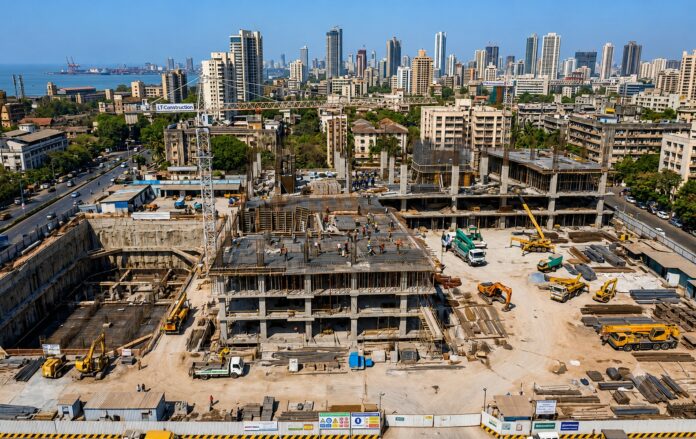
West Bengal has a substantial infrastructure pipeline under implementation, with 82 ongoing central-sector projects carrying a revised cost of around ₹1.47 lakh crore as of April 2026, according to a report by the PHD Chamber of Commerce and Industry’s Research Bureau. Cumulative expenditure on these projects stands at about ₹79,609 crore.
The projects span railways, roads, power, ports, coal, oil and gas, steel, telecommunications and aviation. Railways account for the largest share with 16 projects worth ₹60,772 crore, followed by roads and highways at ₹15,963 crore across 24 projects, and three electricity-generation projects worth around ₹21,645 crore.
The report argues that West Bengal should adopt an integrated, cluster-based manufacturing strategy, leveraging the Kolkata–Haldia–Durgapur–Kharagpur–Howrah industrial belt and its connectivity to eastern and northeastern markets. Rather than pursuing isolated industrial projects, the proposed approach focuses on building clusters where manufacturers can access infrastructure, suppliers, skilled manpower and logistics within a connected ecosystem.
Engineering is identified as a strong starting point, given Howrah’s foundry ecosystem and complementary capabilities in Durgapur, Kharagpur and Kalyani spanning heavy engineering, precision manufacturing and industrial infrastructure. The report also proposes positioning the state as an “Eastern India Integrated Electronics & ESDM Hub”, building on existing clusters at Naihati and Falta.
The state’s GSDP grew from ₹6.10 lakh crore in FY2015–16 to ₹9.42 lakh crore in FY2024–25. The report identifies availability of large, contiguous, legally clear industrial land as a key investment-enablement issue going forward.