

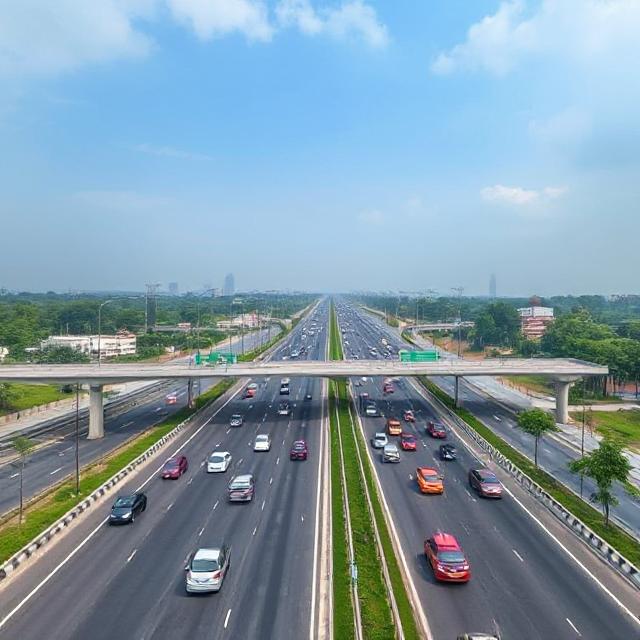
A four-lane flyover is set to be developed at the busy Hapur Chungi junction in Ghaziabad to ease chronic traffic congestion in the area. Spanning approximately 800 metres, the proposed structure will connect directly to National Highway 58 (NH-58), streamlining movement towards Delhi and neighbouring regions.
Estimated to cost ₹98 crore, the project aims to resolve long-standing bottlenecks at one of the city’s most critical intersections. Hapur Chungi is a key gateway for traffic between Ghaziabad, Hapur, Meerut, and the national capital, with daily volumes often exceeding capacity and causing frequent delays.
Officials confirmed that a Detailed Project Report (DPR) is under preparation and will soon be submitted to the Uttar Pradesh state government for approval. The DPR will outline engineering designs, traffic impact studies, environmental factors, and the construction schedule.
A major element of the flyover’s construction will be the extensive use of structural steel in its girders, reinforcement bars, and crash barriers. Steel’s strength, flexibility, and long service life make it indispensable for bridge and flyover infrastructure. High-grade steel plates and beams will be used to support heavy traffic loads, while galvanised steel components will ensure resistance to corrosion, reducing long-term maintenance needs.
For the steel industry, projects like this represent a steady demand stream for rolled sections, reinforcement bars, and fabricated assemblies. The requirement for precise fabrication and quality control in such infrastructure ensures that domestic steel producers remain key contributors to urban mobility upgrades.
If approved, the flyover will cut travel times, improve safety by separating through traffic from local movement, and enhance overall connectivity in Ghaziabad. Modern design features such as efficient drainage, energy-saving LED lighting, and noise-reduction measures are also under consideration, ensuring the structure meets both functional and sustainability goals.