

Introduction: There was a time when manufacturing competitiveness was measured largely by the sophistication of machines on the shop floor. Companies invested in faster CNCs, automated fabrication lines, robotic welding cells and precision machining centres, believing productivity depended solely on individual machines. While these technologies transformed manufacturing, they also exposed an often-overlooked reality: even the most advanced machine delivers little value if raw materials, components or finished products cannot reach it at the right time, in the right sequence and with complete safety.
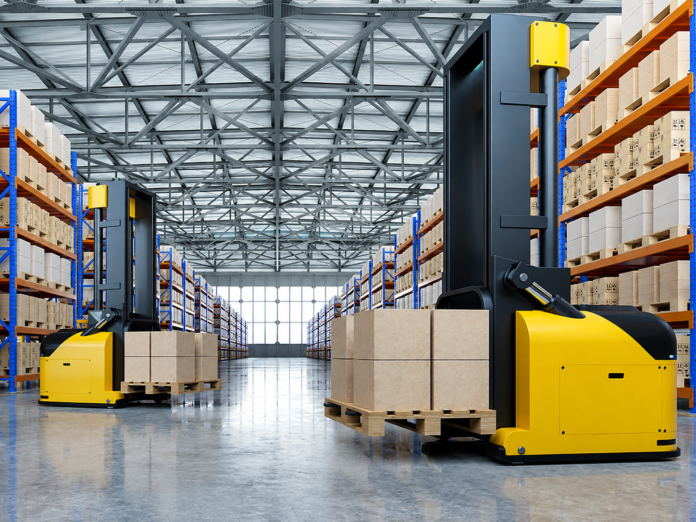
As manufacturing ecosystems become increasingly integrated, productivity is no longer determined by individual equipment but by the efficiency of the entire production chain. Every movement of steel plates, fabricated assemblies, dies, coils or finished products influences plant performance. Delays in material movement, even if seemingly minor, can accumulate into significant losses in throughput, higher operating costs and missed delivery schedules. Consequently, material handling has emerged as one of the most critical, yet least visible, contributors to manufacturing efficiency.
THE ROLE OF INDUSTRIAL LIFTING SYSTEMS
This shift is redefining the role of industrial lifting systems. Overhead cranes, once regarded simply as utility equipment, are now recognised as strategic production assets that influence productivity, safety, energy efficiency and operational continuity. Their role has expanded well beyond lifting heavy loads; they are becoming integral to workflow optimisation, production planning and the broader digital transformation of manufacturing.
Few organisations have witnessed this evolution more closely than Gulmohar Engineering Works. According to Saharsh Dalal, Head – Strategic Growth (Sales & Marketing), the Indian material handling industry has entered a new era of technological advancement.
“The Indian material handling industry has undergone a remarkable transformation, driven by automation, digitalisation and higher manufacturing standards. Traditional lifting equipment is being replaced by intelligent crane systems equipped with Variable Frequency Drives (VFDs), remote diagnostics, anti-sway technologies and IoT-enabled monitoring. With the rapid growth of sectors such as automotive, steel, warehousing, infrastructure and renewable energy, customers increasingly seek cranes that enhance productivity, minimise downtime and integrate seamlessly into smart manufacturing environments.”
The timing of this transformation is significant. As India’s manufacturing sector expands on the back of infrastructure development, automotive growth, renewable energy investments and export-driven production, manufacturers face mounting pressure to improve productivity, reduce operating costs and shorten project timelines. These objectives cannot be achieved through faster machines alone; they depend equally on the seamless movement of materials throughout the production cycle.
No two manufacturing facilities are alike. An automotive component plant has vastly different material handling requirements from a structural steel fabrication shop or a foundry operating under extreme conditions. Factors such as production layout, headroom constraints, duty cycles, environmental conditions and future expansion plans make standardised lifting solutions increasingly inadequate. Crane engineering has therefore become a highly customised discipline, requiring an understanding of manufacturing workflows as much as lifting mechanisms.
Dalal believes this has fundamentally changed customer expectations. “Customers today look beyond the initial purchase price. They expect engineered solutions that deliver higher reliability, lower maintenance costs, improved safety and long-term operational efficiency. There is also a growing preference for premium components from globally recognised brands, especially in critical applications, as customers increasingly evaluate the total cost of ownership rather than just capital investment.”
“Every crane begins with understanding the customer’s process rather than simply its lifting capacity. Our engineering team evaluates the application, duty cycle, load characteristics, building layout, headroom constraints, operating environment, future expansion plans and safety requirements. This enables us to develop customised solutions that maximise performance while ensuring compliance with applicable Indian and international standards.”
A crane is not merely installed within a factory; it becomes an integral part of its production ecosystem.
ENGINEERING THE FACTORY, NOT MERELY THE CRANE
As manufacturing has evolved into an interconnected ecosystem, engineering has moved beyond individual machines to encompass the entire production process. Material handling sits at the heart of this transformation, linking every stage from raw material storage and fabrication to assembly, inspection and dispatch. The efficiency of a lifting system, therefore, directly influences the efficiency of the factory itself.
This shift has redefined customer expectations. Manufacturers no longer seek equipment suppliers; they seek engineering partners who understand production challenges and deliver solutions that improve overall plant performance. The conversation has moved from lifting capacity to lifecycle performance.
According to Saharsh Dalal, Gulmohar Engineering Works adopts this collaborative approach from the very beginning. “Our engagement begins the moment we receive an enquiry. We work closely with customers during concept development, technical discussions, site evaluation, design optimisation, manufacturing, installation, commissioning and after-sales support. This collaborative approach ensures the crane is engineered to meet both current operational needs and future production requirements.”
Designing a crane involves far more than determining lifting capacity. Factors such as Safe Working Load (SWL), span, lifting height, duty cycle, building layout, environmental conditions, operating speeds, safety requirements and future expansion all influence the final solution.
As Dalal explains: “Crane selection depends on several critical engineering factors, including Safe Working Load, span and lifting height, duty classification, frequency of operation, the type of material being handled, building dimensions and runway design, environmental conditions, speed and precision requirements, power availability, safety and automation requirements, and future capacity expansion. Selecting the right crane requires balancing technical performance, operational efficiency and lifecycle cost.”
The emphasis today is on lifecycle value rather than acquisition cost. A cheaper crane may reduce initial investment, but frequent breakdowns, maintenance costs and production losses often outweigh any upfront savings. Increasingly, manufacturers recognise that understanding the production process is just as important as understanding the lifting requirement.
Dalal notes: “Modern cranes increasingly incorporate VFD-controlled motions, radio remote controls, overload protection systems, anti-collision devices, encoder-based positioning, condition monitoring, energy-efficient IE3, IE4 and IE5 motors, PLC-based controls and IoT-enabled diagnostics. These technologies improve safety, precision, energy efficiency and equipment reliability.” These innovations do far more than improve lifting. They enhance positioning accuracy, reduce energy consumption, minimise wear on critical components and improve overall manufacturing efficiency.
According to Dalal, “Manufacturers are increasingly seeking automation to improve productivity and reduce human intervention. Remote monitoring, predictive maintenance alerts, real-time operational data and cloud-based diagnostics are becoming key decision-making factors, especially in high-volume manufacturing facilities operating multiple cranes.” Real-time monitoring enables maintenance teams to identify potential failures before they occur, shifting maintenance from reactive repairs to predictive asset management. “Sensors can continuously monitor operating hours, motor temperatures, brake wear, vibration, load cycles and fault history, enabling maintenance teams to address issues before failures occur. This significantly reduces unplanned downtime and extends equipment life.”
Dalal highlights few common shortcomings: “Some common challenges include selecting cranes based solely on price, ignoring duty cycle requirements, poor preventive maintenance practices, overloading beyond rated capacity, inadequate operator training, delayed replacement of worn components and not planning for future production growth. Addressing these issues can substantially improve both safety and equipment longevity.”
Ultimately, technology delivers its greatest value only when backed by robust engineering principles. This becomes especially evident in workplace safety, where thoughtful crane design can reduce operator fatigue, improve load control and minimise manual intervention.
As Dalal concludes, “A well-designed crane minimises operator fatigue, reduces manual intervention and enhances load control. Features such as overload protection, anti-sway control, limit switches, emergency braking, ergonomic controls and optimised structural design contribute significantly to safer lifting operations. Engineering the crane specifically for its intended application is one of the most effective ways to improve workplace safety.”
Safety, productivity and reliability are the natural outcomes of intelligent engineering.
FROM LIFTING EQUIPMENT TO PRODUCTION INTELLIGENCE
The true value of an engineering solution is measured not by its specifications but by its impact on the shop floor, including shorter production cycles, smoother workflows, safer operations and greater reliability. This is especially true of industrial lifting systems, whose contribution often goes unnoticed because they keep production moving seamlessly. When materials flow without interruption, machines remain productive, operators focus on manufacturing and the crane quietly becomes an enabler of industrial excellence.
Delivering this level of efficiency demands far more than standard equipment. Every manufacturing facility presents unique structural constraints, operational challenges and production goals, making customised engineering essential. Over the years, Gulmohar Engineering Works has developed numerous application-specific solutions where conventional crane designs would have limited productivity. As Saharsh Dalal explains, “We have supplied customised cranes for customers with limited headroom, complex production layouts and demanding duty cycles where standard cranes would not have delivered optimum performance. By optimising lifting height, travel speeds, structural design and control systems, these customised solutions have improved workflow, reduced material handling time and enhanced overall production efficiency.”
The philosophy is straightforward: the objective is not merely to move loads, but to eliminate inefficiencies from the manufacturing process. Every second saved during a lifting cycle, every unnecessary movement eliminated and every bottleneck removed contributes directly to higher throughput and long-term productivity.
Yet, material handling often remains an underestimated element of production planning. While manufacturers invest heavily in production equipment, the systems responsible for moving materials between processes frequently receive less strategic attention. In reality, even the most advanced machinery cannot perform efficiently if material flow fails to keep pace.
“Cranes are evolving into intelligent engineering systems capable of generating operational insights and supporting informed decision-making.” – Saharsh Dalal, Head – Strategic Growth (Sales & Marketing), Gulmohar Engineering Works