

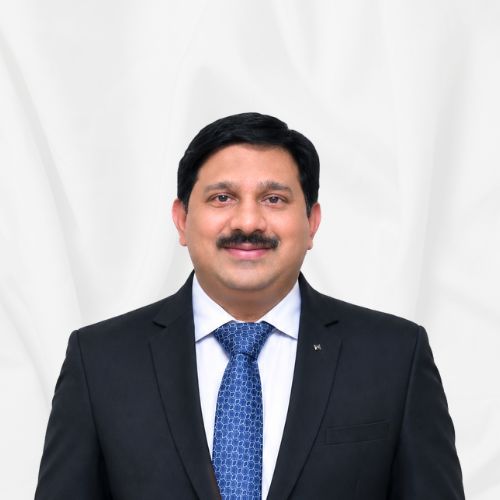
Introduction: Over more than two decades, from testing CT and MRI machines across Western India to commissioning some of the country’s most energy-conscious hospitals, NEELESH SHINDE, Group Chief Technical Officer & Head – Projects, Jupiter Life Line Hospitals Ltd, has built his career on a single conviction: a hospital is not a building that happens to house medical equipment, but a piece of medical infrastructure in its own right. From Jupiter Thane’s founding blueprint to Dombivli’s IGBC Platinum rating in 25 months from excavation, Shinde’s journey traces a shift in Indian healthcare architecture from cautious retrofitting to purpose-built, patient-centric, and deeply sustainable design.
You moved from a sales service engineer role with CT and MRI machines in the late ’90s to Group CTO overseeing an entire hospital infrastructure. Walk us through that journey. What was the turning point where you started thinking like a builder and project leader, not just a technical specialist?
I started my career as a biomedical engineer before moving into medical imaging systems, first with Elscint, an Israel-based company, and later with Wipro GE Healthcare Systems. Over the next eight years, I worked extensively with CT scanners and MRI systems, focusing on testing and commissioning rather than sales. During this period, I covered the entire Western India region and personally commissioned more than 75 CT scanners and part of the installation team for 10 numbers of MRI machines. Every time I visited a hospital site for pre-installation inspections, I encountered the same recurring challenge. The required infrastructure, such as temperature and humidity control, air conditioning, proper earthing, and other environmental conditions, was rarely ready. Contractors often struggled to meet these requirements, resulting in significant delays in equipment installation and project completion.
Those experiences fundamentally shaped my thinking. When I joined Jupiter Hospital as a founding member in January 2004, I made a conscious decision that whenever we built a hospital, every requirement for medical equipment, including temperature and humidity control, earthing, and positive or negative pressure environments, would be fully ready from day one, so that engineers could begin equipment installation immediately without delays. We commissioned our first hospital, Jupiter Hospital Thane, in 2007. Within the first two years of operation, we realised that our monthly electricity bill had reached ₹40–50 lakh, which was a significant burden for a hospital that was still in its early growth phase with a limited patient base. That experience became another turning point in my career. It shifted my focus from simply building hospitals to building energy-efficient hospitals.
As a result, when we planned our second greenfield project, Jupiter Hospital Pune, we integrated energy efficiency into the design from the very beginning. The project was developed in collaboration with BEEP (The Indo-Swiss Building Energy Efficiency Project), a government-supported initiative that had implemented 18 projects across India. Jupiter Hospital Pune was the only healthcare project selected under this programme. Our efforts were later recognised by the Ministry of Power, Government of India, when Jupiter Hospital Pune received the Best Energy Efficient Hospital Award. We subsequently commissioned Jupiter Hospital Indore in 2020 and most recently completed Jupiter Hospital Dombivli in just 25 months from excavation to commissioning.
The hospital has also achieved IGBC Platinum certification, reflecting our continued commitment to building sustainable, energy-efficient, and future-ready healthcare infrastructure. Looking back, the turning point in my journey was realising that a hospital is not just a building that houses medical equipment. It is a highly specialised piece of healthcare infrastructure where engineering, clinical requirements, sustainability, and operational efficiency must come together seamlessly. That mindset transformed my role from a technical specialist into Excellence in Healthcare infrastructure on creating hospitals that are HI-Tech, efficient, resilient, and designed for the future.
“The arc of the transformation is going from a single engineer handling a few radiology machines to building high-tech, green, patient-centric hospitals over 28 years.”
You have delivered greenfield hospitals like Dombivli in 25 months, and Pune and Thane on tight, fixed timelines. What is the biggest difference between designing a hospital from scratch versus retrofitting advanced technology into a hospital that is already running?
The transformation over the last 28 years has been remarkable, from being an engineer responsible for commissioning radiology machines to leading the development of high-tech, green, and patient-centric hospitals. The biggest difference between designing a greenfield hospital and retrofitting an operational hospital is the freedom to plan versus the constraints of working in a live healthcare environment. A greenfield hospital offers a significant advantage because you start with a blank canvas. From day one, your vision is clear, you know exactly what you want to build. In our case, the objective has always been to create hospitals that are technologically advanced, energy-efficient, patient-centric, and environmentally sustainable. When we started the Jupiter Hospital Dombivli project, we had already set a clear goal of achieving IGBC Platinum certification.
That clarity allowed every stakeholder from architects and consultants to engineers and contractors to work towards a common objective from the planning stage itself. Retrofitting an existing hospital is an entirely different challenge. The hospital is fully operational, and patient care cannot be disrupted. Even routine civil work creates noise and dust, which must be carefully managed in occupied clinical areas. Activities such as welding or other hot work require extensive precautions because electrical systems, medical gas pipelines, and other critical services are already in place. Every modification must be planned around patient safety, infection control, fire and life safety, and uninterrupted hospital operations.
In a greenfield project, you have the opportunity to optimise every aspect of the design before the hospital becomes operational. You can integrate technology, sustainability, engineering services, and clinical workflows seamlessly from the beginning. In a retrofit project, however, every improvement must be implemented while ensuring that the hospital continues to function safely and efficiently. That is the fundamental difference. Greenfield projects allow you to design and build the ideal hospital from the ground up, whereas retrofitting requires balancing innovation with the responsibility of maintaining uninterrupted patient care in a live healthcare environment.
“Sustainability cannot be an afterthought. It has to be defined by leadership from day one.”
Hospital construction has a unique constraint that most commercial or residential projects do not: the building has to function as a precision medical instrument from day one. How does that change the way you brief your structural and MEP teams compared to a standard building?
A hospital is fundamentally different from a commercial or residential building because it is not just a building, it is a precision healthcare facility that must function flawlessly from the day it becomes operational. Every engineering decision directly impacts patient safety, clinical outcomes, and the performance of highly sophisticated medical equipment. Unlike a standard building, where the primary objective is occupant comfort, a hospital contains a wide range of environments with very different engineering requirements. Areas such as CT scan rooms, MRI suites, cath labs, operation theatres, and LINAC bunkers require tightly controlled conditions, typically temperatures between 18 and 20°C with relative humidity below 60% in a non-condensing environment. In contrast, patient wards, offices, waiting areas, and back-of-house spaces require only comfort air conditioning. This makes hospital MEP design significantly more complex than that of conventional buildings.
Another important consideration is that medical technology evolves continuously. The equipment installed today may be replaced by larger, heavier, or more advanced systems over the next 10 to 15 years. Therefore, the hospital structure must be designed not only for today’s requirements but also for future technologies that may not yet exist. That is why, from the very beginning, I work closely with architects, structural engineers, and MEP consultants to build flexibility into the design. Wherever possible, we use structural solutions such as post-tensioned (PT) beams and PT slabs to minimise columns and create larger, unobstructed spaces. This provides the flexibility to accommodate future equipment, modify layouts, or expand clinical services without major structural changes or disruption to hospital operations.
My brief to the design team is always the same: design a hospital that can adapt over the next 40 years. The structural engineer naturally focuses on delivering a safe building for the day it is commissioned, but the operations team has to live with that building for decades. Every new medical technology brings new infrastructure requirements, and the building should be ready to accommodate those changes without compromising patient care or interrupting hospital services. That is why I believe sustainability and resilience go beyond energy efficiency. They also mean designing hospitals that are flexible, future-ready, and capable of adapting to changing clinical needs throughout their lifecycle.
“In greenfield, you can give your absolute best, because there is no human being present during construction.”
If you were advising a young structural engineer or project manager who wants to specialise in healthcare infrastructure, what should they understand about this sector that no other building typology teaches them?
Healthcare infrastructure is unlike any other sector. A hospital is not just a building, it is a living, continuously operating ecosystem where every engineering decision ultimately affects patient care. That is why technical knowledge alone is never enough. My advice to any young structural engineer or project manager is to combine theoretical knowledge with practical experience. Books teach you engineering principles, but projects teach you leadership. When a project faces a crisis, and every project eventually does, that is when your leadership, decision-making, and problem-solving abilities define your future.
Over the years, I have developed a simple philosophy that I call the PROJECT Framework.
P – Positive Thinking: Every successful project begins with confidence. Whether the challenge is large or small, you must believe that it can be achieved in a predefined schedule.
R – Result-Oriented Resource Allocation: You will rarely have the perfect team or unlimited resources. A successful leader uses the available resources effectively and remains focused on delivering the desired outcome.
O – One Team Concept: Healthcare projects involve architects, structural engineers, MEP consultants, biomedical engineers, contractors, clinicians, and hospital operations teams. They may belong to different organisations, but they must function as one team with one common objective.
J – Judgement: Challenges are inevitable. Good leaders anticipate risks, make timely decisions, and resolve issues before they become major problems.
E – Effective Communication: Communication is not just about sharing information; it is about ensuring that the right information reaches the right people at the right time, with complete clarity.
C – Chasing the Goal: Great projects are delivered by teams that remain relentlessly focused on the final objective from the very first day until completion.
T – Timely Execution: Quality, cost, and timelines must move together. Delivering the project on time without compromising safety or quality is what defines true project excellence.
This philosophy has guided every project we have undertaken at Jupiter Hospitals. It has helped us achieve several industry milestones, including completing the fastest MRI installations in Southeast Asia, twice in just 10 days, compared with the industry norm of nearly a month. We also commissioned India’s first AI-enabled GE cath lab in just two days and delivered a 750,000 sq ft IGBC Platinum-certified greenfield hospital at Dombivli in only 25 months from excavation to commissioning. Twice we did commissioning of operation theatres with third party validation in just seven days.
These achievements were not possible because we had extraordinary resources; they were possible because we had a clear vision, worked as one team, and remained committed to the goal every single day. That is my advice to young professionals: master your technical skills, but never stop developing your leadership. If you embrace the PROJECT framework, you will build more than hospitals, you will build a career defined by excellence, resilience, and lasting impact.
“We typically design a hospital building for a minimum of 50 years.”
In utility-scale solar and wind projects, how critical is steel in ensuring long-term durability and lifecycle performance?
It is absolutely fundamental.
Utility-scale solar and wind assets are designed to operate for 25 years or more under some of the harshest environmental conditions—from intense heat and coastal salinity to heavy monsoons and cyclonic winds. Their long-term performance depends heavily on the strength and durability of the supporting steel structures.
If those structures corrode or fail prematurely, the impact extends well beyond maintenance. It can affect module alignment, reduce energy generation and compromise the overall efficiency of the plant.
That is why the quality of steel, precision in fabrication and effective corrosion protection are so critical. Advanced hot-dip galvanizing and anti-corrosion systems play a vital role in extending asset life while reducing operational risks and lifecycle costs.
As renewable projects continue to grow in scale and complexity, the focus must extend beyond faster construction to building infrastructure that delivers reliable performance for decades.
Innovation is rapidly changing steel-intensive infrastructure. Where do you see the biggest opportunities in modular construction, prefabrication and corrosion-resistant systems for renewable energy?
Innovation in structural steel is advancing as rapidly as renewable energy itself. As projects become larger and commissioning timelines tighter, the industry is moving towards greater standardisation, prefabrication and automation.
One of the biggest opportunities lies in modular construction. By shifting fabrication, welding and finishing from the site to controlled factory environments, we can improve quality, reduce installation time and accelerate project delivery. For renewable energy developers, faster commissioning directly translates into earlier power generation and better project economics.
Corrosion protection is another critical area of innovation. Since renewable assets often operate in harsh environments, advanced hot-dip galvanizing and next-generation zinc-aluminium-magnesium coatings are playing a key role in extending the lifespan of steel structures while reducing maintenance requirements.
We are also seeing growing demand for lightweight, high-strength steel sections to support advanced solar tracking systems. As renewable infrastructure becomes smarter and more efficient, structural engineering must evolve alongside it.
Ultimately, innovation in steel is not just about developing stronger materials—it is about enabling faster construction, longer asset life and lower lifecycle costs.
“The future of renewable infrastructure will be shaped as much by engineering innovation as by energy innovation.”
From both an EPC contractor’s and a developer’s perspective, what do you expect from today’s steel solution providers?
Today’s renewable energy projects operate under demanding timelines, making the role of steel solution providers more critical than ever. For me, it comes down to three essentials—precision, speed and compliance.
Precision is non-negotiable. Even the slightest dimensional variation across structural components can disrupt installation and lead to costly project delays. Manufacturing excellence is therefore as important as sound engineering.
The second expectation is scalability. As renewable energy projects grow in size and pace, developers need partners who can rapidly scale production without compromising quality or delivery schedules.
Equally important is compliance. Every structural component must meet stringent engineering standards, from material quality and fabrication accuracy to galvanizing performance. Complete traceability, rigorous testing and consistent quality assurance are essential to ensure long-term reliability.
The industry today is not looking for vendors—it is looking for dependable engineering partners who can add value across the entire project lifecycle.
Having built businesses across multiple sectors, what advice would you give to entrepreneurs entering capital-intensive industries such as infrastructure and renewable energy?
Infrastructure rewards patience far more than speed.
When I began my entrepreneurial journey, I didn’t have abundant financial resources. What I did have was the determination to use every available resource wisely and create value through innovation. My first advice is to master resourcefulness before chasing capital.
The second lesson is to build the right team. Infrastructure projects are too complex to be driven by one individual. Success comes from empowering capable engineers, financial experts, planners and operational leaders, and trusting them to deliver.
Finally, execution discipline is everything. In capital-intensive industries, delays quickly translate into higher costs and reduced profitability. Delivering projects on time and with consistency is one of the greatest competitive advantages an organisation can have.
Most importantly, never fear setbacks. Every challenge offers a lesson, and every lesson brings you closer to building a stronger, more resilient enterprise.
“Capital builds projects. Discipline builds enterprises.”
Looking back on your journey, what, in your view, distinguishes a successful entrepreneur from a leader who leaves behind a lasting legacy?
A successful entrepreneur builds a profitable business. A legacy-building leader builds an institution that continues creating value long after the founder has stepped away.
While growth, market share and financial performance are essential, true leadership demands a much broader perspective. A lasting legacy is created when decisions are driven not only by quarterly results, but also by their long-term impact on society, industry and future generations.
At KP Group, we have always believed that infrastructure should contribute to India’s energy security while supporting environmental sustainability. That responsibility extends beyond shareholders to employees, customers, communities and the nation.
We often describe “KP” as Kamyabi ka Path—the Path to Success. For me, it symbolises creating opportunities for thousands of people to grow together. When an organisation continues to inspire innovation, create livelihoods and contribute to national progress long after its foundation, that is when entrepreneurship truly becomes a legacy.
If you had to define the future of India’s renewable energy journey in one sentence, what would it be?
India has a unique opportunity to lead the global energy transition—not just by generating more renewable power, but by building an integrated ecosystem where engineering excellence, advanced manufacturing, structural steel and clean technologies come together to create lasting national value. The future will belong to those who think beyond individual projects and build infrastructure that serves generations.
SSMB POV
Dr. Faruk G. Patel’s journey reflects the evolution of India’s infrastructure sector from execution-led contracting to integrated, technology-driven renewable energy development. More than the scale of KP Group’s growth, what stands out is his emphasis on engineering excellence, vertical integration and long-term value creation. For the steel construction industry, the message is clear: as renewable energy projects become larger and more sophisticated, structural steel is no longer just a construction material; it is a strategic enabler.