

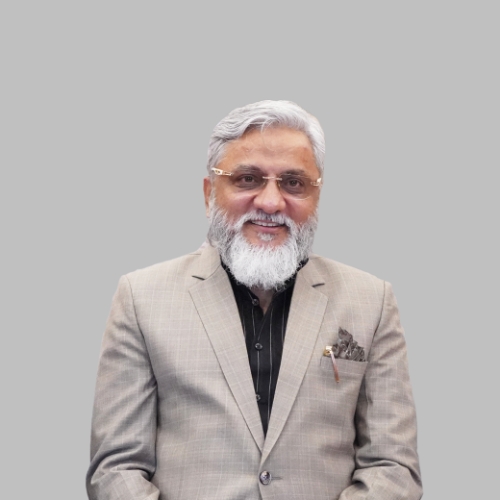
Dr. Faruk G. Patel on Entrepreneurial Courage, Engineering Scale, and Why Steel Will Continue to Power India’s Renewable Revolution
Introduction: Three decades ago, Dr. Faruk G. Patel began his entrepreneurial journey with an investment of just ₹1 lakh. What started in logistics and construction evolved into telecom infrastructure before culminating in renewable energy. Today, as Chairman & Managing Director of KP Group, he leads one of India’s fastest-growing renewable energy enterprises with a rapidly expanding portfolio. Yet, beyond the scale of growth lies a philosophy rooted in execution, resilience and long-term value creation. In this exclusive conversation with SSMB, Dr. Patel reflects on the defining moments of his entrepreneurial journey, the role of integrated engineering in accelerating renewable energy, the growing importance of structural steel, and why true leadership is measured not by quarterly performance, but by the legacy it leaves behind.
You began your entrepreneurial journey with a modest setup in 1994 and went on to build a diversified conglomerate. What were the defining moments that shaped your transition from a small business owner to a renewable energy leader?
Every entrepreneurial journey begins with a small step. Mine started in 1994 with an initial capital of just ₹1 lakh. In the early years, we focused on logistics and construction, where we learnt the fundamentals of execution—managing heavy engineering projects, coordinating complex operations, and understanding infrastructure from the ground up.
The first major turning point came in 1999 when we entered the telecom infrastructure sector. India was witnessing a telecommunications boom, and we became part of that transformation by executing mobile tower rollouts across 16 states. Delivering more than 3,500 telecom sites under demanding timelines taught us invaluable lessons in scale, precision and execution.
The defining shift came in 2008. As the telecom sector underwent structural changes, I realised that lasting businesses are built by anticipating the future rather than reacting to the present. Renewable energy was still at a nascent stage in India, but I saw it as both a business opportunity and a national responsibility.
That conviction led to the launch of KPI Green Energy in 2008, followed by KP Energy in 2010. Acquiring our first 220 acres in Sudi, Bharuch, and introducing a solar park plotting model required taking calculated risks when very few believed in the sector’s potential.
Looking back, that decision gave our business a new purpose. Today, KP Group’s renewable portfolio has grown to 8.52 GW across solar, wind and hybrid energy, with a vision of reaching 10 GW by 2030. More importantly, it reinforced my belief that sustainable businesses are built by aligning commercial growth with national priorities.
“Enduring businesses are built by anticipating the market’s future not by reacting to its past.”
Having worked across construction, telecom infrastructure, and renewable energy, how did each phase of your journey prepare you for the next?
One of the greatest lessons infrastructure has taught me is that no experience is ever wasted. Every phase equips you with capabilities that become invaluable in the next.
Our early years in construction and logistics gave us a strong foundation in engineering execution. We learnt to manage complex projects, optimise logistics, and understand that disciplined execution is the cornerstone of any successful infrastructure business.
The telecom infrastructure phase accelerated that learning. Delivering thousands of tower sites across multiple states demanded speed, precision and quality, while strengthening our expertise in steel fabrication, galvanizing and large-scale project execution.
By the time we entered renewable energy, we had already built the capabilities that many new entrants were still trying to develop—a deep understanding of structural steel engineering, strong execution discipline, and expertise in land consolidation and EPC delivery.
That experience gave us a natural advantage in developing both Independent Power Producer (IPP) and Captive Power Producer (CPP) projects. Looking back, every transition was a logical progression rather than a diversification. Each chapter strengthened the next and laid the foundation for the business we are building today.
“In infrastructure, experience never becomes obsolete, it simply finds a larger canvas.”
You often speak about building businesses with purpose. In today’s fast-growing infrastructure ecosystem, how can organisations balance profitability with long-term responsibility?
I have always believed that success without values is like a tree without roots. It may grow quickly, but it cannot withstand long-term challenges.
In capital-intensive industries, the pressure to prioritise short-term gains is always present. However, I don’t believe profitability and purpose are opposing goals. In fact, purpose is what makes profitability sustainable.
At KP Group, we have embedded this philosophy into our business model. Through our Captive Power Producer (CPP) model under the Solarism initiative, we help industries reduce both their energy costs and carbon footprint. When businesses become more competitive while contributing to environmental sustainability, everyone benefits.
Our commitment extends beyond business as well. Whether through mangrove restoration or the initiatives of the KP Human Development Foundation, we believe infrastructure should create lasting value for communities alongside financial returns.
Ultimately, organisations that address meaningful societal challenges build stronger customer trust, attract better talent and create more resilient businesses. In my experience, purpose is not a cost of doing business—it is one of the strongest drivers of long-term growth.
India is aggressively pursuing its renewable energy ambitions. From your perspective, where do you see the biggest opportunities and the most pressing challenges in this transition?
India’s renewable energy journey is one of the most exciting infrastructure transformations underway today. The country’s target of achieving 500 GW of non-fossil fuel capacity is not just an energy goal—it is an economic, industrial and environmental mission that will shape India’s future.
The opportunities are immense. Demand from commercial and industrial consumers for clean, reliable and cost-effective power is growing rapidly. Businesses are increasingly viewing captive renewable energy not just as a sustainability initiative, but as a strategic business advantage.
Large renewable energy hubs such as Khavda in Gujarat further demonstrate the scale at which India is now thinking. We were fortunate to be among the early developers there, commissioning a 240 MWp solar project while building a much larger pipeline to support the country’s clean energy ambitions.
The challenges, however, are equally significant. Expanding generation capacity must be matched by robust transmission infrastructure. Grid evacuation, land acquisition, evolving state-level policies, and volatility in the prices of solar modules and structural steel all require developers to remain agile and financially disciplined.
Despite these hurdles, I remain extremely optimistic. India’s renewable energy story is only beginning, and the opportunities ahead far outweigh the challenges.
“Renewable energy is no longer just an environmental commitment—it is becoming a strategic business decision.”
With emerging technologies such as green hydrogen, battery storage and hybrid energy systems gaining momentum, where do you see the next wave of disruption?
Your group’s presence across fabrication, galvanizing and renewable energy gives you a unique perspective. How do steel structures contribute to faster and more efficient renewable energy projects?
Renewable energy may appear to be about solar modules and wind turbines, but the foundation of every successful project is structural engineering.
The next phase of the energy transition will not be driven by individual technologies alone—it will be driven by integration.
While standalone solar and wind projects have transformed the industry, they also come with intermittency challenges. The future lies in combining solar, wind and Battery Energy Storage Systems (BESS) to create cleaner, more reliable and dispatchable power. Hybrid systems are already improving grid stability while making better use of transmission infrastructure.
Beyond this, I believe green hydrogen will be one of the defining opportunities of the next decade. Sectors such as steel, chemicals, fertilisers and heavy transport cannot rely solely on electrification. They need clean fuels capable of replacing fossil-based processes, and green hydrogen has the potential to bridge that gap.
Recognising this opportunity early, we established KPI Green Hydrogen and are developing advanced production capabilities using high-efficiency alkaline electrolysis. Our recent green hydrogen project from NTPC NETRA further strengthens our confidence in this emerging space.
Ultimately, renewable electricity is only the beginning. The real transformation will come from converting clean energy into clean fuels that can decarbonise industries where emissions have traditionally been the hardest to eliminate.
Without robust structural steel, the entire project ecosystem becomes vulnerable.
One of KP Group’s greatest strengths has been building engineering capability alongside energy development. Through KP Green Engineering, we design, fabricate and hot-dip galvanize our own structural components. This level of vertical integration significantly reduces dependency on external supply chains while allowing engineering, manufacturing and project execution to progress simultaneously.
More importantly, it provides flexibility.
Every project presents unique geographical and climatic conditions. Coastal regions, desert environments, high-wind zones and varying soil conditions all demand customised structural solutions. Having complete control over fabrication enables us to respond quickly without compromising quality or delivery schedules.
For me, steel is much more than a construction material. It is the structural backbone that transforms engineering drawings into operating infrastructure. It provides the precision, durability and speed that modern renewable energy projects demand.
“Steel is not merely a construction material—it is the structural backbone of renewable energy.”
In utility-scale solar and wind projects, how critical is steel in ensuring long-term durability and lifecycle performance?
It is absolutely fundamental.
Utility-scale solar and wind assets are designed to operate for 25 years or more under some of the harshest environmental conditions—from intense heat and coastal salinity to heavy monsoons and cyclonic winds. Their long-term performance depends heavily on the strength and durability of the supporting steel structures.
If those structures corrode or fail prematurely, the impact extends well beyond maintenance. It can affect module alignment, reduce energy generation and compromise the overall efficiency of the plant.
That is why the quality of steel, precision in fabrication and effective corrosion protection are so critical. Advanced hot-dip galvanizing and anti-corrosion systems play a vital role in extending asset life while reducing operational risks and lifecycle costs.
As renewable projects continue to grow in scale and complexity, the focus must extend beyond faster construction to building infrastructure that delivers reliable performance for decades.
Innovation is rapidly changing steel-intensive infrastructure. Where do you see the biggest opportunities in modular construction, prefabrication and corrosion-resistant systems for renewable energy?
Innovation in structural steel is advancing as rapidly as renewable energy itself. As projects become larger and commissioning timelines tighter, the industry is moving towards greater standardisation, prefabrication and automation.
One of the biggest opportunities lies in modular construction. By shifting fabrication, welding and finishing from the site to controlled factory environments, we can improve quality, reduce installation time and accelerate project delivery. For renewable energy developers, faster commissioning directly translates into earlier power generation and better project economics.
Corrosion protection is another critical area of innovation. Since renewable assets often operate in harsh environments, advanced hot-dip galvanizing and next-generation zinc-aluminium-magnesium coatings are playing a key role in extending the lifespan of steel structures while reducing maintenance requirements.
We are also seeing growing demand for lightweight, high-strength steel sections to support advanced solar tracking systems. As renewable infrastructure becomes smarter and more efficient, structural engineering must evolve alongside it.
Ultimately, innovation in steel is not just about developing stronger materials—it is about enabling faster construction, longer asset life and lower lifecycle costs.
“The future of renewable infrastructure will be shaped as much by engineering innovation as by energy innovation.”
From both an EPC contractor’s and a developer’s perspective, what do you expect from today’s steel solution providers?
Today’s renewable energy projects operate under demanding timelines, making the role of steel solution providers more critical than ever. For me, it comes down to three essentials—precision, speed and compliance.
Precision is non-negotiable. Even the slightest dimensional variation across structural components can disrupt installation and lead to costly project delays. Manufacturing excellence is therefore as important as sound engineering.
The second expectation is scalability. As renewable energy projects grow in size and pace, developers need partners who can rapidly scale production without compromising quality or delivery schedules.
Equally important is compliance. Every structural component must meet stringent engineering standards, from material quality and fabrication accuracy to galvanizing performance. Complete traceability, rigorous testing and consistent quality assurance are essential to ensure long-term reliability.
The industry today is not looking for vendors—it is looking for dependable engineering partners who can add value across the entire project lifecycle.
Having built businesses across multiple sectors, what advice would you give to entrepreneurs entering capital-intensive industries such as infrastructure and renewable energy?
Infrastructure rewards patience far more than speed.
When I began my entrepreneurial journey, I didn’t have abundant financial resources. What I did have was the determination to use every available resource wisely and create value through innovation. My first advice is to master resourcefulness before chasing capital.
The second lesson is to build the right team. Infrastructure projects are too complex to be driven by one individual. Success comes from empowering capable engineers, financial experts, planners and operational leaders, and trusting them to deliver.
Finally, execution discipline is everything. In capital-intensive industries, delays quickly translate into higher costs and reduced profitability. Delivering projects on time and with consistency is one of the greatest competitive advantages an organisation can have.
Most importantly, never fear setbacks. Every challenge offers a lesson, and every lesson brings you closer to building a stronger, more resilient enterprise.
“Capital builds projects. Discipline builds enterprises.”
Looking back on your journey, what, in your view, distinguishes a successful entrepreneur from a leader who leaves behind a lasting legacy?
A successful entrepreneur builds a profitable business. A legacy-building leader builds an institution that continues creating value long after the founder has stepped away.
While growth, market share and financial performance are essential, true leadership demands a much broader perspective. A lasting legacy is created when decisions are driven not only by quarterly results, but also by their long-term impact on society, industry and future generations.
At KP Group, we have always believed that infrastructure should contribute to India’s energy security while supporting environmental sustainability. That responsibility extends beyond shareholders to employees, customers, communities and the nation.
We often describe “KP” as Kamyabi ka Path—the Path to Success. For me, it symbolises creating opportunities for thousands of people to grow together. When an organisation continues to inspire innovation, create livelihoods and contribute to national progress long after its foundation, that is when entrepreneurship truly becomes a legacy.
If you had to define the future of India’s renewable energy journey in one sentence, what would it be?
India has a unique opportunity to lead the global energy transition—not just by generating more renewable power, but by building an integrated ecosystem where engineering excellence, advanced manufacturing, structural steel and clean technologies come together to create lasting national value. The future will belong to those who think beyond individual projects and build infrastructure that serves generations.
SSMB POV
Dr. Faruk G. Patel’s journey reflects the evolution of India’s infrastructure sector from execution-led contracting to integrated, technology-driven renewable energy development. More than the scale of KP Group’s growth, what stands out is his emphasis on engineering excellence, vertical integration and long-term value creation. For the steel construction industry, the message is clear: as renewable energy projects become larger and more sophisticated, structural steel is no longer just a construction material; it is a strategic enabler.