

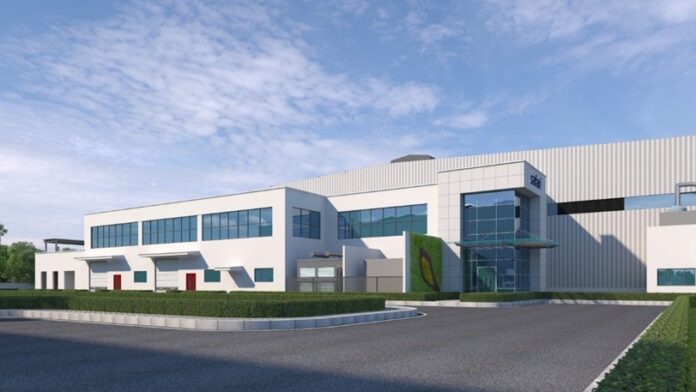
Introduction: India’s manufacturing sector is undergoing a structural transformation. Manufacturing facilities are no longer conceived merely as spaces for production; they are emerging as integrated operational ecosystems that directly influence efficiency, logistics intelligence, and long-term scalability. The newly completed manufacturing and warehousing campus for Safari Manufacturing Limited in Jaipur, Rajasthan, reflects this evolution. Designed by Studio Linedesign Projects LLP, the facility demonstrates how strategic planning, steel-led construction, and disciplined project management can translate an ambitious industrial vision into a high-performance operational platform.
A MANDATE ROOTED IN SPEED AND CLARITY
From the very outset, Safari Manufacturing Limited defined its expectations with clarity. The brief was direct: build fast, maintain uncompromised safety standards, ensure operational readiness from day one, and remain firmly within defined financial parameters.
The project was therefore approached not as an isolated construction exercise, but as the creation of a fully integrated production ecosystem. Several contextual challenges needed to be addressed early in the planning stage. The land parcel, located within the larger industrial framework of Mahindra World City Jaipur, had been partially developed and required careful spatial integration with the surrounding infrastructure. Soil conditions demanded structural precision, while the presence of an existing mazar within the site required sensitive planning and respectful integration.
Each of these factors was addressed through early coordination and transparent decision-making. At Studio Linedesign, the project team adopted a structured execution philosophy. It was to establish clarity at the planning stage and maintain disciplined momentum through the construction phase.
The result was a project trajectory defined by decisive leadership and coordinated engineering, rather than reactive problem-solving.
ENGINEERING THE INDUSTRIAL FLOW
Spanning approximately 450,000 sq ft, the Safari campus integrates multiple operational components within a single cohesive layout including manufacturing, finishing, packaging, and logistics dispatch.
This integration was not accidental. Every circulation route, adjacency relationship, and loading interface was mapped around production logic. The objective was to minimize operational friction while ensuring seamless movement of materials across the facility.
A key component of this ecosystem is the 220,000-sq-ft warehouse facility, designed to support Safari’s extensive luggage portfolio. The warehouse functions not only as a storage hub but also as a critical logistics node serving nationwide distribution and high-velocity e-commerce fulfilment.
With platforms such as Amazon and Flipkart driving rapid order cycles, the warehouse infrastructure had to support speed, precision, and inventory visibility. Storage systems, therefore, incorporate multi-tier racking configurations reaching up to G+6 and G+7 levels, maximising vertical storage capacity while maintaining retrieval efficiency.
Inventory management is further strengthened through Godrej high-rise tracking systems, enabling structured SKU monitoring across large inventory volumes. Traceability begins at the shell manufacturing stage itself, where barcoding protocols are integrated into the production cycle, ensuring seamless tracking from manufacturing to final dispatch.
In essence, the architecture of the facility responds as intelligently to logistics flows as it does to structural performance.
STEEL AS THE STRUCTURAL BACKBONE
For a facility of this scale and operational intensity, the selection of structural material was a strategic decision.
Large uninterrupted production zones demanded spans exceeding 100 m, while warehouse operations required column spacing of up to 35 m to ensure flexibility in material handling and equipment movement. Achieving these parameters efficiently would have been challenging with conventional construction systems.
Approximately 1,775 metric tonnes of structural steel were deployed across the facility to deliver these large spans while maintaining structural precision and rapid construction timelines.
The Pre-Engineered Building (PEB) system, executed by EPACK Prefab Technologies Limited, enabled efficient off-site fabrication and accelerated on-site assembly. Structural design was handled by A.K.B Consultants, ensuring stability across the variable soil conditions of the site.
Project management was overseen by JLL, which coordinated the multiple stakeholders, vendor networks, and scheduling milestones necessary to sustain the project’s aggressive timeline.
Steel, in this context, proved to be far more than a structural material. It became an enabler of speed, adaptability, and long-term scalability.
“Steel was not merely a construction choice. It was a strategic decision that enabled scale, speed, and operational flexibility.”
DESIGNING FOR OPERATIONAL CONTINUITY
Industrial infrastructure must function reliably under continuous operational pressure. Any disruption, whether environmental, logistical, or infrastructural can affect production efficiency. To address this, the Safari facility integrates several engineering strategies aimed at maintaining uninterrupted operations.
Raw material silos feed moulding machines through pneumatic piping systems, establishing a continuous production loop that reduces manual handling and improves throughput efficiency. Roofing installation was carefully sequenced around Jaipur’s monsoon cycle, ensuring that internal work progressed without weather-related interruptions.
The campus supports a workforce of over 1,500 employees, including both permanent and contractual staff. Worker productivity and comfort were therefore considered essential design parameters.
Roofing systems incorporate high Solar Reflectance Index (SRI) values exceeding 78, reducing heat absorption and improving thermal performance. Insulation systems are tailored to Jaipur’s climatic conditions, while daylight integration within the PV building significantly reduces dependence on artificial lighting during daytime operations.
The administrative block, constructed in reinforced concrete and articulated with local Dholpur sandstone finishes, introduces a strong architectural identity while maintaining functional clarity within the campus.
SUSTAINABILITY WITH MEASURABLE IMPACT
Environmental performance was embedded within the project’s design framework from the early stages.
The facility has achieved IGBC Gold Certification, reflecting its commitment to responsible industrial development. A 3 MW solar power plant contributes significantly to the facility’s energy resilience and reduces dependence on conventional power sources.
Water management systems include rainwater harvesting infrastructure and integrated C-treatment systems that ensure responsible recycling and reuse. Low-flow plumbing fixtures reduce consumption, while advanced energy monitoring systems allow continuous tracking of operational performance.
Rather than being treated as a compliance requirement, sustainability was positioned as an operational advantage. Reduced energy consumption, optimized daylighting, and efficient water management translate directly into long-term cost savings for the facility.
Steel in Numbers:
- Total Facility Area: 450,000 sq ft
- Warehouse Area: 220,000 sq ft
- Structural Steel Used: 1,775 MT
- Maximum Span: Over 100 metres
- Maximum Column Spacing: 35 metres
- Solar Plant Capacity: 3 MW
- Certification: IGBC Gold
LEADERSHIP THAT ENABLED SPEED
Delivering a project of this magnitude within ten months required decisive leadership and consistent coordination. Amit Sharma, Project Head, Safari Manufacturing Ltd played a central role in maintaining site-level execution discipline and ensuring alignment among contractors, consultants, and vendors. Safari’s internal management and finance teams also contributed significantly through quick approvals and timely fund releases, eliminating administrative bottlenecks.
The project’s success illustrates a fundamental principle often overlooked in large infrastructure projects that speed is rarely about rushing. It is about removing indecision and enabling continuous momentum.
Today, the Jaipur campus stands fully operational, strengthening Safari Manufacturing Limited’s ability to scale production while supporting both domestic distribution and fast-growing e-commerce channels.
“Speed in industrial construction is not about haste—it is about eliminating uncertainty.”
THE FUTURE OF INDUSTRIAL INFRASTRUCTURE
The Safari facility represents more than the completion of a single project. It illustrates how industrial architecture, structural engineering, and logistics planning can converge into a single strategic framework.
India’s manufacturing ambitions, driven by global supply chain realignments and domestic consumption growth, will increasingly depend on such integrated industrial ecosystems. Facilities that combine scalability, operational intelligence, energy efficiency, and rapid delivery timelines will define the next generation of manufacturing infrastructure.
For designers and engineers alike, the message is clear: industrial buildings must be conceived not as static structures, but as dynamic platforms for growth.
Why It Matters:
Projects like the Safari Manufacturing campus highlight a critical shift in India’s industrial landscape. As manufacturing accelerates under initiatives such as Make in India and the expansion of global supply chains, the demand for intelligent industrial infrastructure will continue to rise. Steel-enabled construction systems, integrated logistics planning, and sustainability-driven design will become essential to meeting this demand. The ability to deliver such facilities rapidly, and with operational readiness from day one, will increasingly determine which companies lead the next phase of India’s manufacturing story.
Projects like the Safari Manufacturing campus reflect a shift in India’s industrial landscape. As manufacturing accelerates under initiatives like Make in India and expanding global supply chains, demand for intelligent industrial infrastructure will grow. Steel-based construction, integrated logistics, and sustainability-driven design will be key to delivering facilities quickly and ensuring operational readiness from day one.
PROJECT SNAPSHOT
- Client: Safari Manufacturing Limited
- Architecture Firm: Studio Linedesign Projects LLP
- Structural Consultant: A.K.B Consultants, Gurgaon
- Project Management Consultant: JLL
- Steel Fabricator: EPACK Prefab Technologies Limited
- Status: Operational