

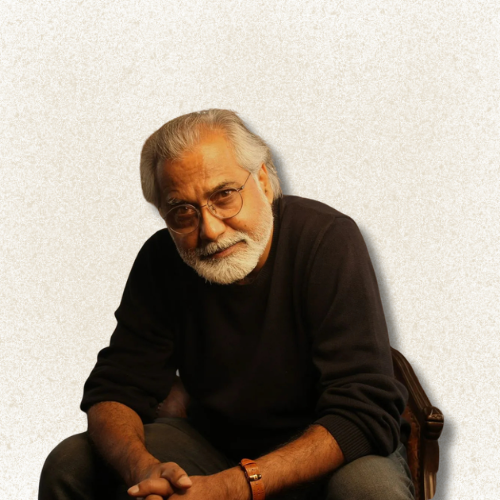
In an era where architecture is increasingly expected to respond to climate, culture, and complexity, Habeeb Khan stands as a voice of clarity and conviction. As Principal of SHK ATP Architects and a seasoned academician, his work reflects a deep-rooted belief in contextual design—where tradition informs innovation and materiality becomes a language of responsibility. With over three decades of practice, Khan’s philosophy has matured into what he defines as contemporary vernacular—an approach that is as much about people and place as it is about performance and possibility.
“A building must belong to its time, neither borrowed from the past nor blind to it.”
You have had a distinguished career in both practice and academia. How has your design philosophy evolved over the years?
Design philosophy evolves over a period of time, and maturity plays a significant role in shaping it. One’s likes, dislikes, and what one feels to be intrinsically true becomes the foundation of what one designs. For me, it has always been a combination of thought process, methodology, and output based upon the first two. These three elements constitutes to define how a design philosophy is formed.
This thought process is influenced by various external factors, and over time, one begins to understand what kind of architect one wants to be. From the very beginning, I was clear about my thought process that’s vernacular, traditional, and deeply Indian in its essence. The first five to six years of my practice were based on this.
However, over a period of time I realised that while ideas may be abundant, a clear method is essential to translate them into effective outcomes. The output ultimately reflects your thinking. We experimented extensively. Some worked, some did not, but every step contributed to the evolution of my philosophy. That learning has been invaluable.
Your work spans over three decades. How would you describe the design philosophy that has evolved through this journey?
Over the past 30 years, my design philosophy has become deeply rooted in context, climate, culture and people but in today’s time frame what I call contemporary vernacular. It would be unwise to recreate architecture of centuries ago because the world constantly keeps changing. Our thoughts, needs, society, and cultural ethos have changed and evolved.
Replicating an ancient structure today ignores the realities of our time. Instead, we must respond to present conditions that include the people we design for, the environment, and the technologies and knowhow available. My approach is to fuse the wisdom of our forefathers with contemporary requirements.
When my building is excavated centuries later, it should clearly date to the 2020s, not to be mistaken for something from 1011 or 1500.
“Aesthetics is not an addition to architecture but is its soul.”
SHK ATP Architects is known for contextually rooted, climate-responsive design. How do you balance aesthetics, function and sustainability in your projects?
For me, these aspects are not in conflict. Aesthetics plays a central role in architecture, as it is what distinguishes architecture from pure engineering. Without art and aesthetics, architecture loses its essence and very existence.
A building must function, certainly, but art and aesthetics remain inseparable from it. Sustainability, in many ways, becomes a byproduct of harmony. A building that is in sync with its environment is inherently sustainable. Interestingly, sustainability and aesthetics are not directly linked. A building can be sustainable yet unattractive, or visually striking yet inefficient. The key lies in designing with environmental sensitivity while ensuring functional and artistic integrity.
What is your perspective on the role of steel in modern Indian architecture, especially in civic, cultural and institutional buildings?
The use of steel in Indian architecture is still evolving. While steel is widely used, it is rarely the primary structural/construction material. Yet, I believe it is one of the most sustainable materials available due to its recyclability and lifecycle efficiency, apart from it’s manufacturing process.
We must encourage the development of full steel structures with minimal reliance on concrete. However, challenges remain like technological limitations, maintenance requirements, and the need for higher-performance steel.
Steel has immense potential, particularly in public and institutional architecture. Over the next decade, I am confident that India will see a significant increase in its adoption.
Can you highlight any projects where steel played a pivotal role in realising your architectural vision either structurally or as an expressive element?
I work extensively with steel, including in private residences, but one of the most noteworthy recent projects is the Banjara Virasat Museum at PohraDevi in Washim Dist. It is a 1,500-metric-tonne inverted dome inspired by the nagada, the traditional drum played by the Banjara community during celebrations.
The structure curves along the X, Y, and Z axes, making the fabrication process highly complex. It is a massive structural dome, and steel was used on a significant scale to achieve its form. We also are working on a large exhibition and convention centre where we have used around 5000 metric tonne of steel and 80 metre wide columnless span. Such an expansive and efficient structure is possible only with steel. Its versatility, efficiency, and ability to achieve minimal yet powerful forms make it indispensable. Both projects are strong examples where steel played a pivotal and defining role.
“Steel allows architecture to become lighter, sharper, and infinitely more expressive.”
In your experience, what are the design opportunities and constraints when working with steel compared to more traditional materials like concrete or brick?
Steel enables highly minimalistic design. Sections are thinner, beams become slimmer, and the overall structure can be optimised more efficiently. When paired with glass, it creates a remarkable visual lightness, the building feels almost feather-like.
However, working with steel requires precision. Joinery, fabrication, construction technology, and advanced systems all demand specialised expertise. Skilled labour is another major constraint, as steel construction cannot rely on untrained workers like concrete often does.
While the initial cost may be higher, the long-term benefits and efficiency make steel a compelling choice.
Many of your projects are rooted in public or institutional spaces. How do you ensure these structures become a meaningful part of the urban fabric?
Architecture succeeds when it responds to people. Designing for public spaces is particularly complex because the users are unknown. You must study the past, understand the present, and anticipate the future.
A building becomes part of the urban fabric when people feel a sense of belonging, when they say, “This is my building.” Architecture engages holistically. True success lies in creating spaces that people value without needing to know who designed them.
How do you incorporate local identity and vernacular inspiration into projects that use modern materials like steel?
We follow what we call our “10 commandments,” a set of guiding principles that help us identify and integrate local identity, context, climate, and community aspirations into every project. These principles ensure that even when modern materials like steel are used, the essence of the place remains intact.
We were recognised by INTBAU-an organisation promoted by King Charles with the 2018 Building of the Year Award for a project that successfully used traditional construction techniques at scale, demonstrating that modernity and tradition can coexist meaningfully.
Habeeb Khan’s “10 Commandments” of Contextual Design
- Respect for local people and their economy
- Respect for local climate, culture and context
- Respect for man and nature
- Non industrial building method
- Re-invention and re-introduction of traditional building construction techniques
- Continuum of tradition
- Imaginative use of traditional building techniques, space and volume
- Recycle, reuse
- Innovation in finishes
- Use of natural materials and an ecological approach towards them
Do you think India’s public architecture is embracing bold structural expression and innovation or are we still playing it safe?
We are largely still playing it safe. While India has had strong architectural contributions, much of it has not been properly documented. The lack of architectural journalism and critique has also played a part. Without critical feedback, architects are not pushed to reflect or improve. Playing safe means avoiding risk and not stretching one’s limits. While progress is visible, the ecosystem still needs to support bold thinking and critical discourse.
As a former President of the Council of Architecture, how do you see architectural education evolving?
The current system is not keeping pace with industry demands and requires a complete overhaul. There is a clear gap between academia and practice. Students are often not market-ready. Practicing architects must engage more actively with education, and institutions must welcome this collaboration. Just as medical education is linked to a hospital, architectural education must be rooted in professional.
“Architecture cannot be taught in isolation, it must be experienced, tested, and built.”
What should young architects learn about materiality and construction systems today?
Young architects must understand the “chemistry” between materials like how steel interacts with glass, how concrete meets steel, and how detailing brings everything together. This knowledge comes through hands-on experience. Most importantly, architects must fall in love with their buildings. When you care deeply, attention to materials and construction follows naturally.
How can architects use materials like steel to create sustainable and culturally resonant buildings?
Architects must first understand materials through direct engagement. The choice of material is secondary to intent. Steel, however, offers exceptional versatility, structurally, aesthetically, and even decoratively. Its true potential is realised when it is used structurally. How it contributes to sustainability and cultural resonance ultimately depends on the architect’s design language.
What is your take on integrating craft, technology and modular thinking in future urban developments?
Contextual design requires harmony between craft, materials, and technology. However, excessive modularity risks erasing individuality. Historically, architecture celebrated uniqueness. Today, globalisation has standardised the design, often sidelining craft. While modular systems offer efficiency, they must be balanced with contextual sensitivity and craftsmanship.
How do you envision collaboration between architects and engineers evolving, particularly in steel-intensive projects?
Architecture cannot exist without engineering. In steel-centric projects, collaboration becomes even more critical. A strong partnership ensures buildings are both visually compelling and structurally sound. This synergy is essential for successful outcomes.
Which projects are you most proud of?
All my projects are equally important, they are like my children. Whether small or large, each holds the same value and significance.
What message would you like to share with SSMB readers about architecture’s role in building a resilient India?
Architecture plays a critical role in shaping how people live and experience spaces, yet its contribution is often overlooked. We must increase awareness of the value architects bring to society. At the same time, architects must remain committed to improving lives. When you truly love what you do, it reflects in your work, and that is how we build a resilient, future-ready India.
Editor’s Note:
Habeeb Khan’s perspective arrives at a crucial moment for India’s built environment, where rapid urbanisation demands both speed and sensitivity. His insistence on contemporary vernacular challenges the industry to move beyond imitation and towards authenticity. Equally compelling is his advocacy for steel, not merely as a material, but as an enabler of efficiency, expression, and sustainability. In a profession often caught between ambition and constraint, Habeeb Khan’s voice is a reminder that architecture, at its best, is not just constructed, it is understood, felt, and lived.