

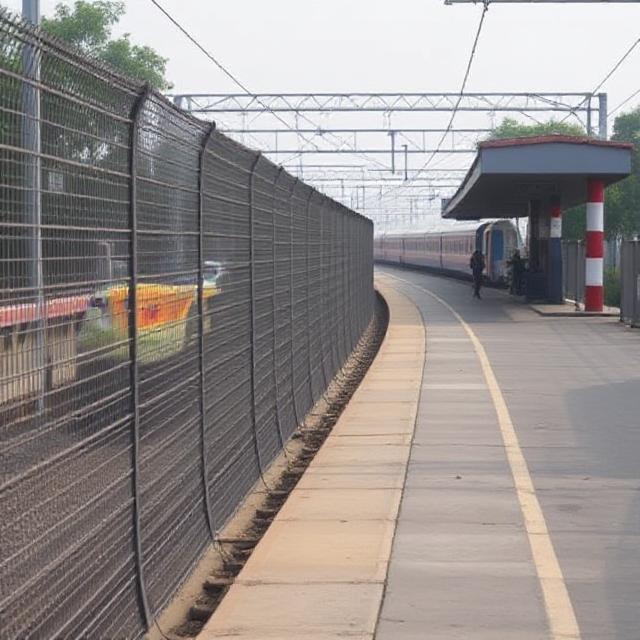
The National High Speed Rail Corporation Limited (NHSRCL) has achieved a major milestone in the Ahmedabad–Mumbai bullet train project by installing extensive noise barriers along the route, aimed at reducing acoustic pollution in densely populated and environmentally sensitive zones.
So far, around 377,000 precast concrete panels have been fitted, covering nearly 188 kilometres of the corridor. These barriers are engineered to minimise noise generated by high-speed operations, ensuring minimal disruption to communities and wildlife. Once complete, noise mitigation will extend over 459 kilometres, with an additional 542,000 panels already cast and awaiting installation.
In addition to concrete, steel plays a critical role in the barrier structures—forming the reinforcement within precast panels, supporting frames for translucent polycarbonate sections, and anchoring systems that secure barriers to the viaducts. The high tensile strength, durability, and corrosion resistance of steel make it ideal for withstanding the vibration, wind pressure, and environmental exposure associated with high-speed rail operations.
In scenic or tourist-sensitive stretches, sections of the barriers integrate transparent polycarbonate panels within steel frames. These not only control noise but also offer passengers uninterrupted views of landscapes while travelling at speeds exceeding 300 km/h.
NHSRCL officials stress that both acoustic engineering studies and environmental considerations guided the barrier design and placement. Efforts have been made to ensure that the structures blend aesthetically with their surroundings without compromising technical efficiency.
This project sets a benchmark for future high-speed rail initiatives in India, demonstrating how advanced engineering, environmental responsibility, and passenger comfort can be seamlessly integrated. For the steel industry, the bullet train corridor is a significant demand driver—supplying structural steel, reinforcement bars, and fabricated assemblies essential to both the barriers and other critical rail infrastructure.