


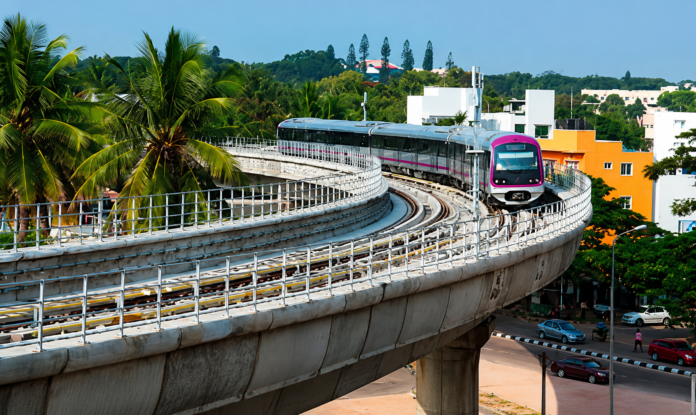
The Indian Railway Finance Corporation is making a strategic pivot beyond its traditional mandate, extending a Rs 13,527 crore term loan to the Hyderabad Metro Rail project. The move marks IRFC’s first significant foray into urban transit financing and signals a broader ambition to evolve from a narrow rolling stock lender into a full-scale infrastructure financier.
Historically, IRFC operated within a low-margin model, primarily leasing rolling stock to the Ministry of Railways and earning net interest margins of just 0.35–0.40 per cent. By leveraging its government-backed credit rating to borrow cheaply and deploy capital into higher-yielding infrastructure projects, IRFC is targeting net interest margins of around 2 per cent, a substantial improvement. The Hyderabad Metro loan is the first concrete step in this repositioning, internally referred to as the IRFC 2.0 strategy.
For the Hyderabad Metro, the refinancing comes at a critical juncture. The Telangana government recently assumed full ownership of the project from Larsen & Toubro, and replacing high-cost external borrowings with a long-term, rupee-denominated loan is expected to ease the project’s financial burden considerably. Profitability is anticipated within a year, and the 20-year repayment structure gives IRFC predictable, stable cash flows, a meaningful counterbalance to the variable nature of railway leasing income.
IRFC has set an ambitious target of approving Rs 1 lakh crore in new loans this fiscal year, with around 50 metro projects across India currently being evaluated. The Hyderabad deal is designed to serve as a blueprint for this expanded lending programme.
However, diversification is not without risk. Analysts have flagged that moving away from IRFC’s near-sovereign, zero-risk-weightage model introduces new counterparty and operational exposures. Unlike Indian Railways, individual metro systems face challenges including fluctuating ridership, fare regulation complexities and potential political interference, all of which can affect cash flow stability. Aggressive expansion also puts IRFC’s enviable record of zero non-performing assets under scrutiny.
IRFC’s stock currently trades at a price-to-earnings ratio of around 18.3, marginally above its 10-year average. Whether the higher yields from urban infrastructure lending justify the added risk compared to its previous sovereign-like security will be the central question investors watch closely. Upcoming financial disclosures will be key to assessing whether IRFC 2.0 delivers on its promise.