
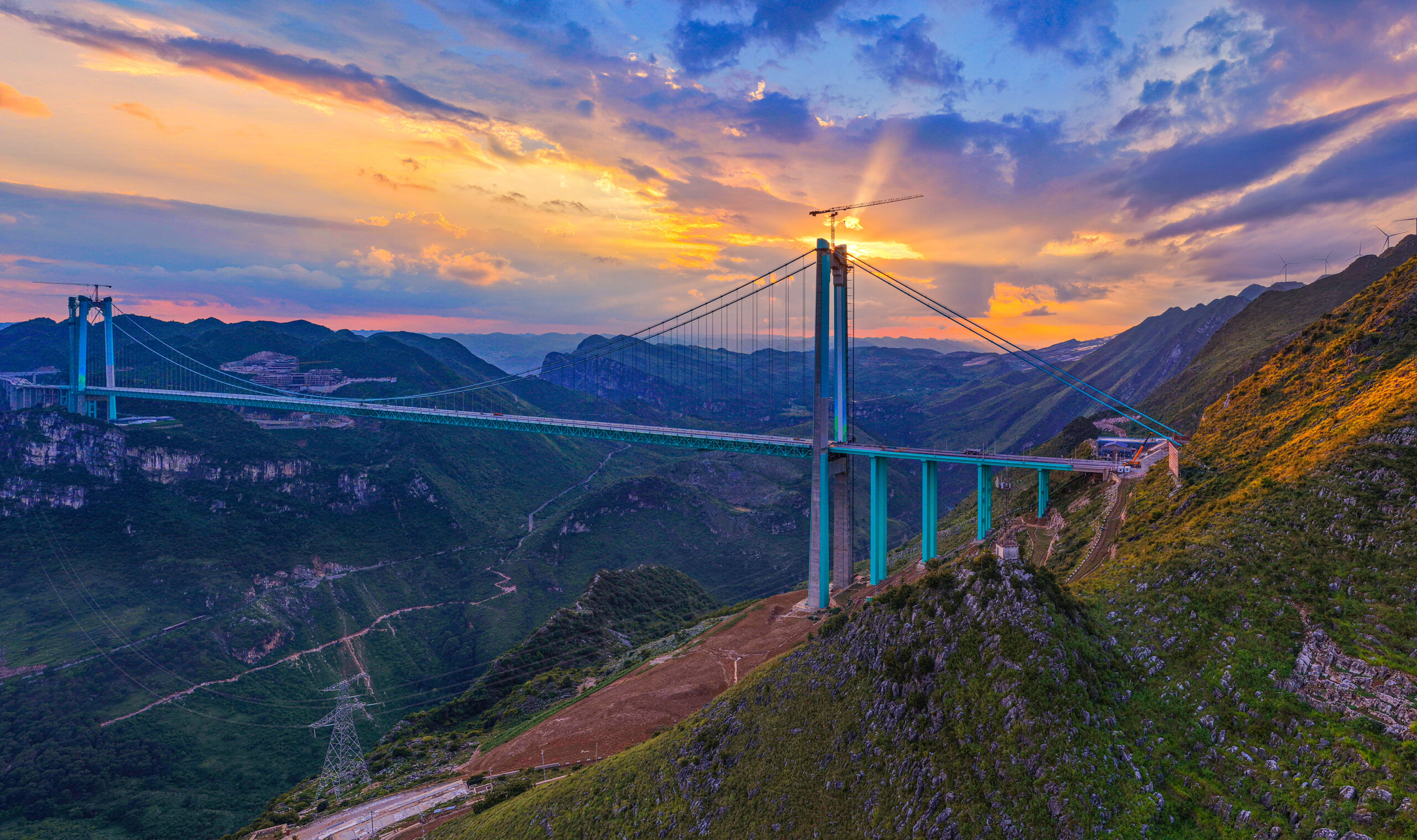
High above the rugged depths of Huajiang Canyon, the newly opened Huajiang Canyon Bridge stands as a striking expression of modern engineering and architectural ambition. More than a means of crossing, it turns a simple journey into an experience shaped by scale, landscape and imagination. Spanning the Beipan River at a height of 625 metres, it now holds the title of the world’s tallest bridge, surpassing the nearby Duge Bridge.
The impact is immediate. What was once a long and winding drive through steep mountain roads has been reduced to just over a minute. For communities in Guizhou, a region long defined by isolation and challenging terrain, this change goes beyond convenience. It quietly reshapes daily life, opening up access, movement and opportunity.
At the same time, the bridge invites people to engage with its surroundings in a more immersive way. A glass observation deck projects out over the canyon, offering uninterrupted views of the dramatic terrain below. A café set high above the river creates a moment of pause within the vastness, while a high-speed elevator connects visitors to these vantage points in seconds. For those seeking a more dynamic experience, skywalks and bungee jumping add a sense of thrill to the vertical landscape.
There is also a distinct poetic quality to the setting. During water displays, streams fall into the canyon, catching light and mist to create a luminous cascade. The scene recalls the imagery of Li Bai, where the Milky Way appears to descend from the sky, blurring the line between imagination and reality.
Completed in under four years using advanced monitoring systems and precise construction methods, the bridge reflects a seamless blend of technical expertise and creative vision. It redefines infrastructure not just as a connector, but as a place where landscape, culture and human experience come together.