
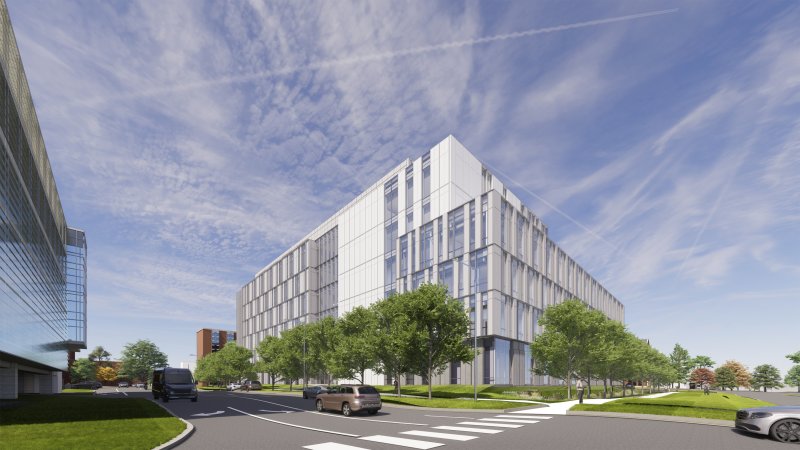
The University of Iowa has marked a major milestone with the topping out of its new Health Sciences Academic Building (HSAB). This seven-storey, 263,000-sq-ft academic hub anchors the university’s 10-year master plan to expand and modernise its health sciences campus. Set for completion in summer 2026, the project represents a new generation of steel-enabled academic infrastructure designed for flexibility, longevity and growth.
Designed by RDG Planning & Design, HSAB brings together three of the university’s most popular and top-ranked programs such as Communication Sciences and Disorders, Physical Therapy, Rehabilitation Sciences, and Health and Human Physiology, within a single, highly adaptable structure. At the core of the design is a steel structural system that enables long spans, open floor plates and reconfigurable interiors, allowing classrooms, clinical spaces and research labs to evolve with changing pedagogies and technologies.
The building’s steel frame supports a central multi-storey atrium, attached together by an interconnecting stair that promotes collaboration across departments while drawing daylight deep into the interior. Extensive insulated glazing, made possible by the building’s robust structural grid, visually connects academic activity with the surrounding campus and neighbourhood which reinforce transparency and engagement.
At ground level, strategic steel cantilevers draw the building volume inward, creating covered walkways and clear entry points, improving wayfinding and pedestrian safety. The structure also integrates seamlessly with nearly an acre of landscaped open space, including shaded outdoor seating areas, a lighted basketball court, and expansive lawns extending learning beyond the classroom.
More than an expansion, HSAB sets a new benchmark for steel-driven academic design, balancing architectural continuity with innovation. By combining structural efficiency, spatial flexibility and sustainability, the building positions the University of Iowa to train the next generation of healthcare professionals while creating a resilient, future-ready campus asset.