

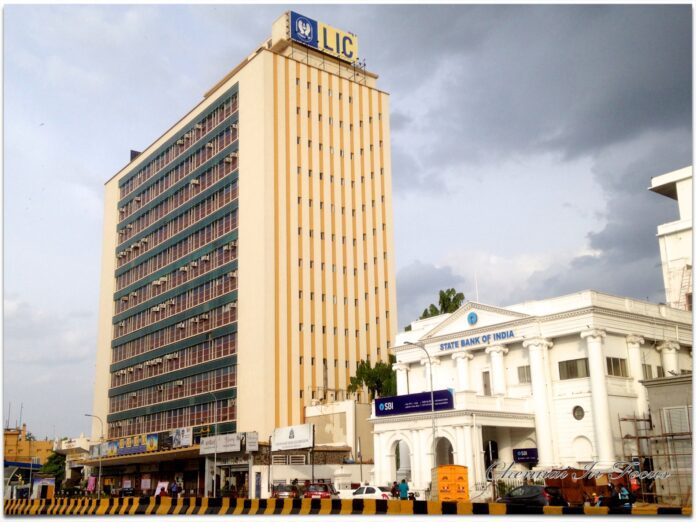
Did you know? India’s first high-rise wasn’t in Mumbai or Delhi, but in Chennai (then Madras). The LIC Building, inaugurated on 23 August 1959, stood at 54 metres (177 ft) with 15 storeys, making it the tallest building in the country at the time.
Before this, most Indian structures rarely rose beyond four or five floors. The LIC Building broke that ceiling, literally and symbolically. It became a beacon of modernity and ambition for a newly independent nation finding its place on the global stage.
Did You Know?
India’s First High-rise: Completed in 1959, it was the tallest building in India at 54 metres (177 ft) with 15 storeys.
Steel Pioneer: The structure used about 1,000 tonne of steel, a remarkable feat for post-Independence India.Fire Survivor: In 1975, the building withstood a major fire, proving the resilience of its design and construction.
Engineering Firsts in Chennai: It introduced pile foundations to the city and featured air-conditioning and high-speed lifts, setting a new standard for modern living and working spaces.
Enduring Symbol: More than six decades later, it still stands as a pride of Chennai, representing both engineering ambition and architectural heritage.
Heritage Lessons for Modern Engineers
- Structural Ambition with Modest Means
The LIC Building’s use of 1,000 tonne of steel may pale in comparison with today’s megastructures, but it set a benchmark. It proved that vertical living and working were possible in India. - Focus on User Comfort
Even in the 1950s, designers prioritised air-conditioning, elevators, and ventilation, features that shaped how people experienced high-rise spaces. Today’s skyscrapers build on that ethos with fire safety systems, energy efficiency, and smart technologies. - Durability as Legacy
Standing tall for over six decades, the building has faced tropical heat, humidity, and even a major fire. Its survival highlights the importance of material choice, protective coatings, and maintenance cycles, principles equally vital in today’s tubular steel bridges and high-rises.
From Chennai’s Pride to Today’s Tubular Advances
While the LIC Building marked the start of India’s high-rise story, its legacy continues to inspire modern engineering. At its completion in 1959, it stood tall with features like air-conditioning and high-speed lifts, luxuries of its time.
The continuity is clear: what began with the LIC Building’s pioneering use of steel has today evolved into more advanced forms. Tubular sections, high-strength bolts, protective coatings, and modular construction methods represent how steel technology has matured, offering greater durability, resilience, and speed while still building on the foundation laid by India’s first skyscraper.
Expert Takeaway
“This building can withstand any lateral force because of the deep foundation. Another specific feature is that the building is packed with concrete walls on the east and west side, so that the sun’s rays do not penetrate the building when the sun rises or sets. This keeps the temperature inside stable. So, having glass windows on the southern and northern side do not heat up the building. The glass provides enough lighting even if there is a power cut.” — S. Thangavel, then Chief Engineer, LIC (1959)
What’s Next on Steel Stories
Next week, we will explore how India’s earliest skyscrapers inform today’s fire safety design in steel high-rises, from the 1975 LIC fire incident to the tubular innovations keeping modern towers safe. Expect more trivia, expert insights, and stories that connect heritage with future forward engineering.
| Project | Year Completed | Height | Steel Usage | Significance |
| LIC Building, Chennai | 1959 | 54 m (177 ft), 15 floors | ~1,000 tonnes | India’s first skyscraper, introduced pile foundations, AC, high-speed lifts |