

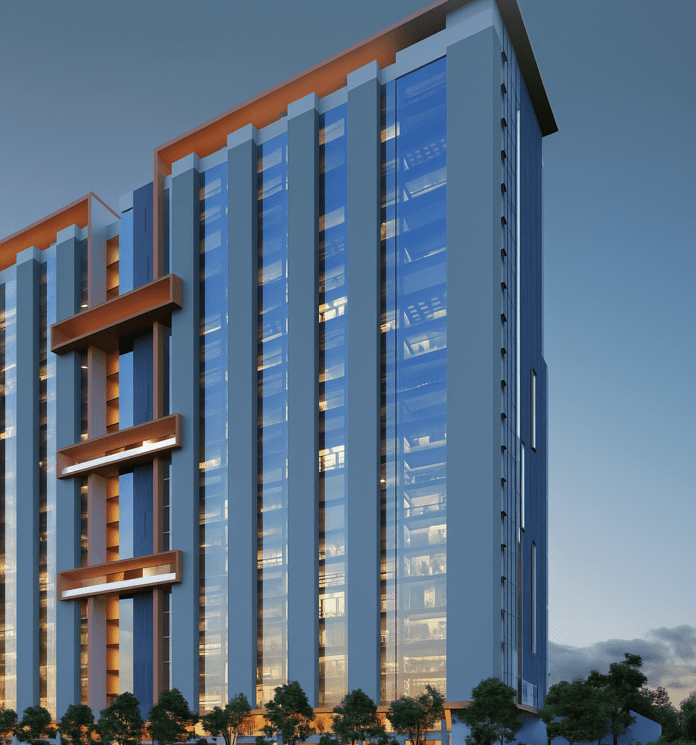
In the shimmering dawn over Delhi, new towers pierce the sky, “sleek, glass-clad, ambitious.” These are not merely edifices of prestige; they are symbols of speed, engineering excellence, and steel’s ascending role in defining India’s high-rise future. As Delhi’s skyline transitions from masonry and concrete sprawl into vertical, modern silhouettes, steel emerges as the backbone, structurally, economically, and architecturally.
The Delhi Skyline Awakens
Take, for example, the DDA’s transit-oriented development (TOD) at Karkardooma, launched in December 2019 and now targeted for completion in December 2026. With structural works in their final phase, the towers rising there are more than housing blocks; they are statements in speed and efficiency. Five years after receiving initial approval, the Delhi Development Authority’s Transit Oriented Development (TOD) project in Karkardooma, East Delhi, is finally underway. Covering 60 acres, the development will feature 30 residential and commercial towers, with the tallest reaching 50 storeys, all strategically located along the Pink and Blue Line corridors of the Delhi Metro.
Steel enables much faster erection through off-site fabrication and modular assemblies, lets engineers use longer spans and slimmer columns (which frees up saleable floor area), and reduces foundation loads because steel frames are lighter than equivalent concrete frames. In a dense city where land is scarce and delivery schedules are tight, adopting steel-intensive solutions — whether as structural steel or as reinforcement and prefabricated components — helps meet deadlines without compromising on usable space or structural performance.
The High-Rise Advantage of Steel
- Structural Speed & Modular Construction
Steel framing, prefabricated beams and girders, modular joints—all let builders dramatically cut down on construction time. Delays from shuttering, curing, and weather constraints that plague concrete work are far less of a hurdle when steel is used. - Higher Strength, Lighter Sections
Steel offers a higher strength-to-weight ratio. Towers built using structural steel or composite steel-concrete systems can handle higher loads and lateral forces (wind, quake) with lighter structures. That means slimmer columns and more usable floor space—key when real estate premium is high. - Global Benchmarks & Engineering Standards
Modern Delhi high-rises are increasingly expected to meet international codes (like Eurocode, AISC, or IS standards), ensuring safety, performance, and longevity. Steel’s uniform properties, quality control from mill to erection, and ability to withstand dynamic loads make it the material of choice for projects aspiring to global benchmarks.
Latest in Steel-Powered Skyline Innovation
Karkardooma’s transit-oriented development (TOD) stands as a prominent example of the ongoing transformation in India’s urban skyline. With structural works in their final phase, the towers rising there are more than just housing blocks; they are statements of speed, efficiency, and modern design. Steel enables much faster erection through off-site fabrication and modular assemblies, allows engineers to use longer spans and slimmer columns, which increases saleable floor area and reduces foundation loads because steel frames are lighter than equivalent concrete structures. In a dense city where land is scarce and delivery schedules are tight, adopting steel-intensive solutions—whether as structural steel or reinforcement and prefabricated components—helps meet deadlines without compromising usable space or structural performance.
Expert Takeaway
According to structural engineers working on these projects, steel is not just about faster builds, it is about better performance. Steel frames allow for taller, more slender towers that remain stable under Delhi’s monsoons, temperature variations, and seismic concerns. Experts say that projects using full steel or hybrid steel-concrete frames often incur slightly higher up-front material costs but achieve savings in overall timeline, reduced foundation size, and lower maintenance over time.
Challenges & The Road Ahead
There are challenges. Supply chain issues, rising raw material prices, ensuring weld quality, protecting steel against corrosion, and meeting code compliance (especially in seismic zones) all demand rigorous planning. But the trend is unmistakable: steel is being woven inextricably into India’s vertical expansion.
For developers, architects, and engineers, adopting steel is not merely a technical choice, it is a strategic one. One that shapes timelines, cost curves, safety, and ultimately the skyline itself.
Closing Thought
When you glance at Delhi tonight and see those high-rises glowing against the sky, remember this: those vertical aspirations are held up by beams and columns of steel. From TOD towers in Karkardooma to steel spans on flyovers, each project raises not just floors but standards. For India to compete globally in architecture, skyscraper living, and urban density, steel is not just supporting structures, but it is defining them.
Stay Tuned
This is only one chapter in India’s vertical story. Come back next week as we explore how steel is reshaping skylines in Hyderabad, “where engineering meets ambition, and the future keeps rising.”