
August 4–6, 2025 | IIT Bombay, Mumbai
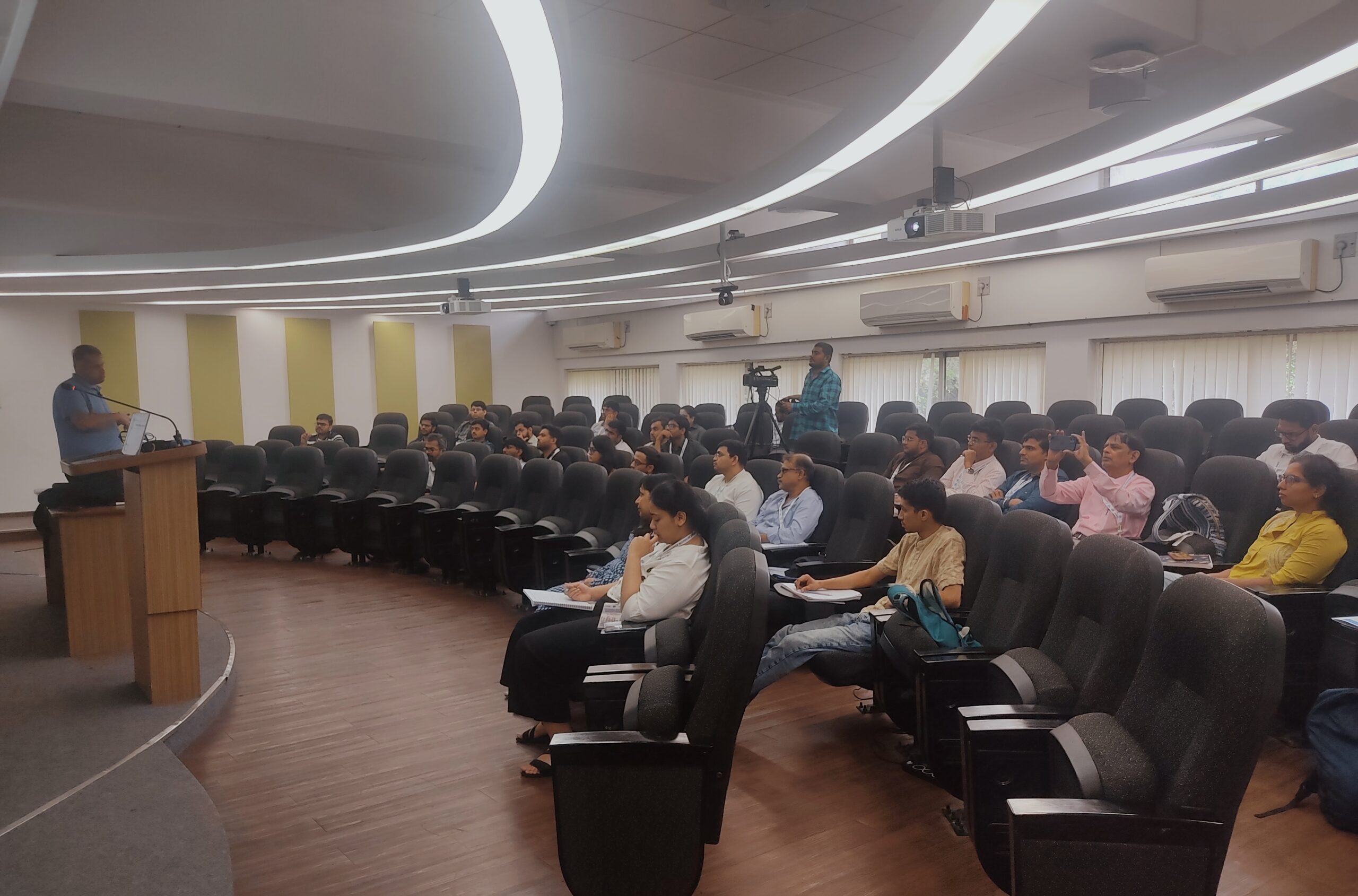
The Department of Civil Engineering at IIT Bombay, in association with Indian Steel Construction Association (ISCA) as its association partner, hosted a three-day Advanced Training Programme on “Performance-Based Design of Buildings: Nonlinear Behaviour Assessment” from August 4 to 6, 2025. The event brought together leading academics, professionals, and postgraduate researchers to delve into advanced structural design techniques crucial for India’s urban and seismic development needs.
The programme was inaugurated with a welcome address by Prof. Ravi Sinha, who emphasised the growing importance of nonlinear assessments in the context of rapid urbanisation and seismic vulnerability. The workshop was coordinated by Prof. Meera Raghunandan, with support from Ph.D. scholar Ms. Charu.
Highlights from the Programme
Day 1: Geometric Nonlinearity
Led by Prof. Amit Kanvinde (University of California, Davis), this session covered second-order effects, P-Δ impacts, and instability mechanisms in tall buildings, supported by case-based modelling insights.
Day 2: Material Nonlinearity
Participants explored inelastic material behaviour, confinement, and cyclic degradation. Prof. Kanvinde also conducted a joint session on integrated nonlinearities — essential for seismic performance-based design.
Day 3: Global Practices and Tools
Dr. Rupa Garai (San Francisco) presented case studies on PBD implementation in mid and high-rise buildings, addressing both technical and regulatory challenges. The day concluded with a hands-on session on Perform3D software, led by Vivek Prasad (CSI India), providing practical insights into nonlinear modelling.
Participants Reflection
“Nonlinear PBD is crucial for retrofitting and redevelopment. The geometric nonlinearity session was particularly insightful for value-driven design.”
— Ajay Dangde, S. Scrut Consultant
“We found direct applicability in industrial steel structures post-audit. The content on Perform3D will enhance our practical workflows.”
— Kishore Boir, Architect & Structural Engineer
“We work on American and Canadian projects across multiple sectors and learning non-linear analysis will help us integrate advanced methods into our designs in the long term.”
— Maansingh Patil, Section Manager – Engineering, Power Division, Burns and McDonnell
“The session on geometric linearity clarified how formulas are derived and how to maximise the efficiency of materials, which will be highly beneficial in our projects.”
— Ashutosh Guptagar, Designer, Afcons Infrastructure
Conclusion
The training programme reaffirmed IIT Bombay’s pivotal role in connecting academic innovation with engineering practice. As India continues to pursue seismic resilience and infrastructure modernisation, such initiatives are vital in empowering professionals with the tools and knowledge required for next-generation structural design.