

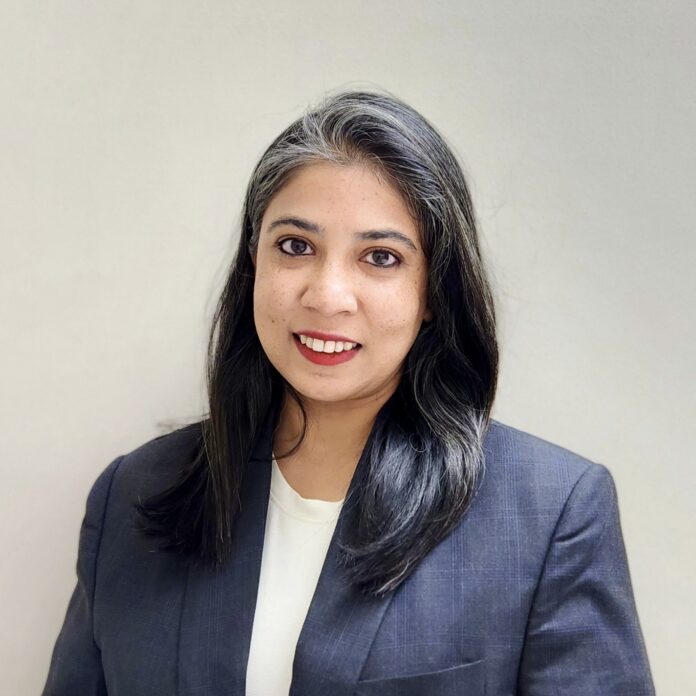
Introduction: A new generation of architects in India is redefining what it means to build a practice — combining design ambition with entrepreneurial courage. Architect Sanjana Samel, Co-founder of SS Design Studio, represents this emerging wave of professionals who are shaping their careers through experimentation, persistence, and a clear design philosophy. For Samel, architecture is not simply about buildings. It is a gateway to a broader design universe that intersects with art, building sciences, culture, and human behaviour. Having established her practice within a decade of graduating, she continues to explore architecture through a lens that prioritises function, human experience, and thoughtful material choices.
In conversation with SSMB for the Womantecture segment, she reflects on the early challenges of entrepreneurship, the importance of resilience in a competitive profession, and her evolving fascination with materials, including the expressive potential of steel.
What sparked your interest in architecture, and what inspired you to take the entrepreneurial route so early in your career?
My interest was always in design rather than architecture alone. For me, any form of design would have been exciting. The process of visualising an idea, refining its details, and eventually bringing it into reality is deeply fulfilling.
Architecture appealed to me because it is one of the few disciplines that connects multiple worlds. It combines art, building sciences, culture, and anthropology into a single creative practice. That interdisciplinary nature made it the most natural path for someone who wanted to explore design in its fullest sense.
Establishing a practice within a decade of graduating is bold. What have been your biggest takeaways so far?
I would not say I am among the few doing this. In fact, many women architects today are starting their own practices and doing exceptionally well.
One of the biggest lessons has been relentless commitment to the work. In the early stages of a practice, you are responsible for everything, from design and presentations to site coordination and administration, before you gradually build a team.
Another reality young architects must accept is that rejection is part of the journey. In the beginning, perhaps 75 percent of proposals may not convert into projects. The real test lies in whether you continue despite that. Persistence becomes the defining factor.
“Design for me is about imagining an idea and then carefully bringing it to life through detail.”
How would you describe the design philosophy guiding your practice?
Our design philosophy is quite simple and clear: the user always comes first.
Every project we undertake begins with understanding how people will interact with the space. We prioritise functionality and user experience above everything else. If a design serves its users well, it naturally becomes meaningful architecture.
For us, it is simply functional, user-centric design.
As a young woman in architecture, what have been the most encouraging and testing moments?
Architecture at the grassroots level can still feel like a male-dominated field, especially when dealing with contractors, vendors, and on-site teams.
Interestingly, the most encouraging and the most challenging moments come from the same place. When I am treated purely as a professional, someone qualified to do the job, it is extremely rewarding. But when gender becomes a factor in how people perceive your work, that can be frustrating.
The positive side is that the industry is gradually changing, and many professionals today recognise capability over labels.
Have you had the opportunity to work with steel in your projects?
We have used steel in smaller capacities, mainly within RCC structures and certain mild steel components, but we are yet to explore steel as a primary structural material on a larger scale.
What fascinates me about steel is its versatility. It can be used across vastly different scales from large structural spans and industrial structures to furniture and interior elements. When understood well and designed with its properties in mind, steel can become a powerful design asset.
“In the early stages of practice, rejection becomes your greatest teacher.”
How do you approach material selection in your projects?
Material selection always begins with context. We ask a series of practical questions: Where will the material be used? What environmental conditions will it face? How will it age over time?
I strongly believe materials should age gracefully, much like a fine wine. A building should become richer in character as time passes.
Structure itself can also be expressive. Architects like Mies van der Rohe demonstrated this beautifully through slender exposed steel members that created a “skin and bones” architectural language. Similarly, Le Corbusier used structural elements to express a machine-like modernity.
In our work, we try to allow structure and material to narrate a story, one that reflects both the building’s aesthetic and the people who inhabit it.
How do you balance experimentation with practical constraints like budgets and client expectations?
A significant part of my experimentation happens in my role as an Assistant Professor, where discussions with students often lead to unconventional design ideas. That academic engagement keeps the creative process alive.
Sometimes we are able to carry those experimental ideas into professional projects as well. However, it is important to be cautious. Design experimentation must remain aligned with client requirements, budgets, and functionality.
Over time, we have found that as trust develops, clients become more open to exploring unconventional ideas.
Which architects or creatives have influenced your design outlook?
My design outlook is shaped by many architects rather than a single individual.
Contemporarily, Norman Foster has been a major influence. What fascinates me is how his firm operates across multiple design domains, from architecture and urban planning to industrial design. That multidisciplinary approach is something I deeply admire.
Historically, I have drawn inspiration from Hasan Fathy and Louis Kahn for their ability to create structures that are humble yet monumental. I also admire B. V. Doshi for his immense contribution to architectural education in India.
For me, inspiration lies in the qualities and philosophies of many individuals rather than in any single figure.
Can you share a project that challenged you the most?
One of the reasons architecture never becomes monotonous is that every project is challenging in its own way.
Each project comes with a different brief, a different client, and a different site context. The design approach must evolve accordingly. Because of this, every project becomes unique and demands a fresh perspective.
If I had to identify one lesson that architecture consistently teaches, it would be patience. It is perhaps the most valuable skill the profession cultivates.
What philosophy keeps you grounded during challenging moments?
One belief that I hold very close is that hard work and humility go a long way.
Research plays a central role in our design process, whether it relates to spatial concepts, materials, presentation methods, or philosophical ideas behind a project.
What I enjoy most about being a designer is that learning never stops. No matter how much experience one gains, there is always something new to explore.
Why It Matters:
The rise of young architects like Sanjana Samel signals an important shift in India’s architectural landscape. With a strong emphasis on user-centric design, research, and material sensitivity, emerging studios are redefining how architecture responds to people and place. Their willingness to start early, experiment thoughtfully, and build practices rooted in design integrity reflects the growing influence of women architects in shaping the next generation of built environments.