


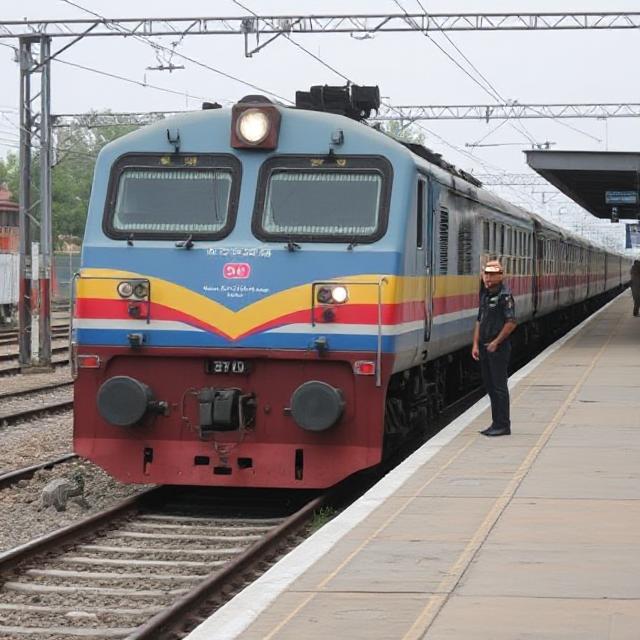
The central government has approved ₹309.26 crore for the deployment of the indigenous automatic train protection system, Kavach, across 790 kilometres in the North Central Railway (NCR) zone. This forms part of a larger ₹27,693 crore national programme to elevate railway safety standards and minimise accident risks.
Kavach is engineered to automatically regulate train speeds, prevent signal passed at danger (SPAD) incidents, and enable rapid emergency braking when required. The NCR rollout will cover key sections through Prayagraj, Agra, Jhansi, and other vital divisions. These corridors are among India’s busiest, carrying high volumes of passenger and freight traffic essential to the national economy.
The deployment will be phased, ensuring seamless integration with existing signalling systems and operational infrastructure. Kavach will continuously monitor train movements, communicating with station control systems to provide real-time safety responses. Railway authorities highlight that the adoption of this advanced indigenous technology demonstrates a strong commitment to operational safety.
Trials conducted on select routes have already proven Kavach’s effectiveness in preventing collisions, particularly in dense traffic areas. Beyond safety, the system is expected to improve punctuality and operational efficiency by optimising braking distances and reducing delays caused by emergency halts.
The infrastructure upgrades for Kavach will also involve extensive use of steel for signal posts, gantries, protective casings, and structural frameworks. These steel components will not only provide durability and resilience but also withstand demanding operational and climatic conditions across the NCR zone.
The NCR implementation marks a significant milestone towards the wider national rollout of Kavach, which will eventually span thousands of kilometres. Once fully operational, the project is expected to set a new benchmark in rail safety while also creating opportunities for India’s steel industry through sustained demand for high-quality structural components.