

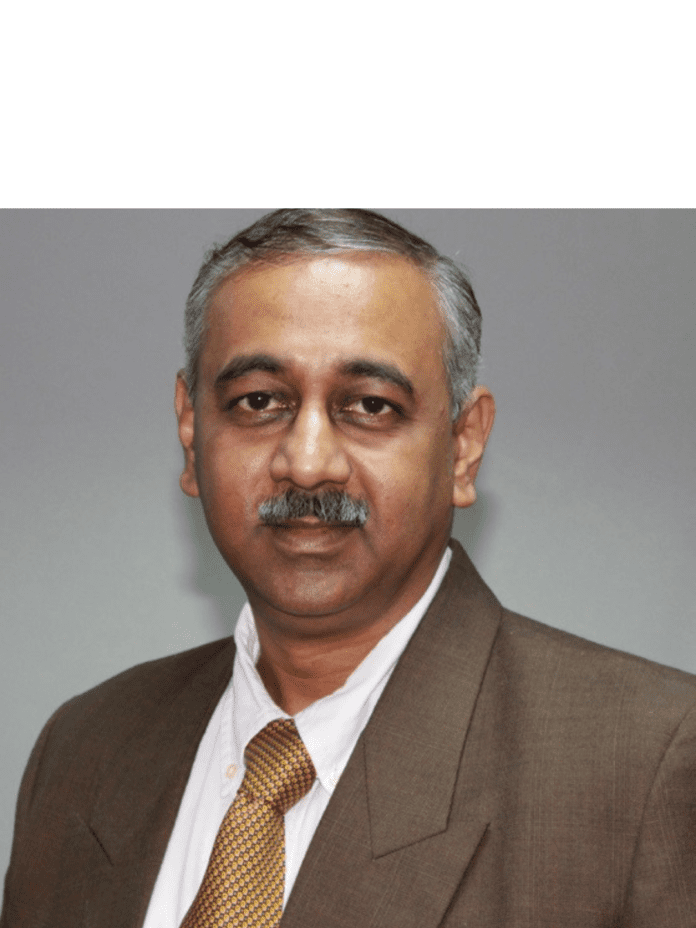
Intro: With over three decades of experience across steel-intensive infrastructure, industrial, and energy projects, VIVEK PATOLE, Vice President – Central Engineering at Tata Projects Limited, has witnessed Indian engineering evolve from manual precision to digitally driven excellence. In this candid TALES conversation, he reflects on the moments that shaped his thinking, from early site learnings to leading multidisciplinary teams, from executing complex steel structures to mentoring future-ready engineers. His journey underscores a quiet but powerful truth: enduring engineering leadership is built not only on technical mastery, but on purpose, adaptability, and people.
Key Achievements:
Delivered over 50 major projects, managed steel tonnage exceeding 5 million MT, and implemented BIM across all strategic projects.
ENGINEER’S SNAPSHOT:
My College: VJTI, Mumbai
Total Experience: 33+ years
Biggest Influences: Early site exposure during internships, mentors who emphasised safety and precision, and global projects that demanded adaptability
Mantra: Empower, Engage, Elevate — leadership through trust and continuous learning
Wants To Be Remembered: For building engineers who grow into leaders, and for delivering projects that set benchmarks in safety and sustainability
Current Steel Projects: Large-scale refinery expansion, metro corridor structures, modular industrial facilities; recent highlights include MRO, Bangalore Airport; Pune Metro; Lothal Museum; and national icons — New Parliament House, Atal Setu (MTHL), Noida International Airport, and Mumbai Metro Aqua Line.
Looking back, what first sparked your interest in civil and structural engineering? Was there a defining moment that set you on this path?
My fascination with civil and structural engineering began at VJTI, Mumbai. What intrigued me most was the constant interplay between theory and application, how calculations on paper eventually translate into real, functional structures.
The true turning point, however, came during a college internship. Seeing design concepts take physical shape on site, and understanding how engineering decisions directly influence safety, performance, and longevity, left a deep impression on me. That experience made the profession feel very real and very responsible. From then on, I knew this was the path I wanted to pursue.
You have transitioned across industries and roles over the years. What skills or philosophies have consistently guided you?
Adaptability and lifelong learning have been central to my journey. The environments I have worked in, whether EPCC, EPCM, or PMC are constantly evolving, and systems thinking helps navigate that complexity.
Equally important has been cross-functional collaboration and trust-based leadership. I believe strong teams are built when people feel accountable yet supported. Strategic thinking, risk management, and knowledge sharing have allowed us to address challenges proactively rather than reactively.
“Engineering became real for me the day I saw drawings turn into structures on site.”
Across your diverse career, which steel-intensive project challenged you the most and why does it stay with you?
Marine construction on the Atal Setu was uniquely demanding. Working in a joint venture to deliver the 7.8 km Package-2 over intertidal zones meant planning around tides, corrosion, seismic risks, and strict environmental constraints. We established a casting yard and a temporary access bridge to navigate the intertidal stretch, deployed advanced methodologies, and coordinated extensively across marine logistics and stakeholder interfaces. Beyond engineering, it was about stewardship, building responsibly in a sensitive ecosystem while meeting exacting quality and safety benchmarks.
Projects like the Naphtha Cracker, RAPID and SBR facility at Panipat, and the Mumbai Aviation Fuel Farm Facility were also particularly demanding, involving intricate steel structures, tight timelines, and intense coordination among multiple stakeholders. Delivering under such circumstances reinforces what disciplined engineering can achieve.
Was there a turning point that significantly shaped your approach to engineering leadership?
Yes, the New Parliament House project was transformative. It called for total systems integration like civil works, MEP, ICT, multimedia, and digitised voting, all delivered to a national deadline with uncompromising standards. Leading multidisciplinary teams in that environment sharpened my belief that early, deep collaboration between engineering and construction is non-negotiable. When design decisions are informed by constructability from the outset, outcomes improve dramatically.
“Steel projects teach you discipline, there is no room for ambiguity when precision defines safety.”
Among the many structures you have worked on, is there a project that stands out as a personal favourite?
The FPSO project for ExxonMobil stands out strongly. Offshore engineering brings a different level of complexity with modular construction, high-performance structural systems, and stringent environmental benchmarks. Another favourite, for its symbolism and scale, is the New Parliament House. It demanded orchestration across disciplines and showcased what coordinated engineering can deliver for the nation.
How have you seen structural design practices evolve over the last decade?
The shift has been profound. Digital tools such as BIM, advanced simulations, and parametric modelling have fundamentally changed how we design and collaborate. On projects like Noida International Airport (Jewar), BIM-driven coordination and modular planning improved accuracy and speed, while contactless and digital systems enhanced the passenger experience. At the same time, the adoption of high-performance materials and modular construction has reduced delivery timelines and improved safety.
“Leadership is not about control; it’s about enabling teams to think and act with confidence.”
What role do you believe steel plays in India’s present and future infrastructure landscape?
Steel is indispensable to India’s infrastructure growth. Its strength, flexibility, and recyclability make it ideally suited for large-scale, fast-paced, and sustainable development. The sheer scale of steel deployment in projects such as Atal Setu illustrates what’s possible when engineering ambition meets material performance.
At Tata Projects, what is your vision for the Central Engineering division?
My vision is to position Central Engineering as a benchmark of excellence technically, digitally, and culturally. This involves driving innovation, strengthening safety and compliance, and ensuring alignment with business objectives.
Through structured training, digital transformation, and value engineering, I want to build a culture of continuous learning and agility, one that consistently delivers projects setting new standards in quality and environmental stewardship.
“The most satisfying legacy is not a landmark structure, but engineers who grow into leaders.”
You have led large multidisciplinary teams throughout your career. What’s your personal leadership mantra?
I believe strongly in the 3Es — Empower, Engage, and Elevate.
Empower teams by giving them ownership, engage them through shared purpose, and elevate their growth through mentoring and development. Trust and open communication form the foundation of this approach and are essential for sustained performance and innovation.
How do you balance project delivery pressures with nurturing innovation?
Innovation cannot be an afterthought, but it must be embedded into the project lifecycle. I rely on agile methodologies, structured design reviews, and pilot initiatives to do this effectively.
Digital tools help automate repetitive tasks, freeing teams to focus on creative problem-solving. When innovation is aligned with delivery objectives, it enhances outcomes rather than disrupting timelines.
In today’s fast-changing industry, what sets successful engineers apart?
Technical competence is only the starting point. The engineers who truly stand out are those who adapt continuously, remain curious, and communicate well across disciplines.
From managing complex, cross-sector projects, I have learned that digital fluency, collaboration, and a strong solution-oriented mindset are what differentiate effective engineers today.
Finally, when you look back at your journey so far, what are you most proud of?
Contributing to projects that have shaped India’s infrastructure, from the New Parliament House to Atal Setu, Noida International Airport, and Mumbai’s underground Aqua Line, gives me great pride. Equally important is mentoring young engineers and building teams grounded in professionalism, innovation, and integrity. Seeing people grow into confident leaders gives me immense satisfaction. That, more than any structure, is the legacy I value most.
Why It Matters:
As India’s infrastructure ambitions accelerate, voices like his underscore an important truth: meaningful progress is built at the intersection of technical rigour and human leadership. Through reflection, mentorship, and an unwavering commitment to excellence, this story captures the essence of engineering as a lifelong pursuit, one that builds structures, teams, and futures with equal intent.
Advice for Young Engineers:
Stay curious, embrace digital tools, and never compromise on safety. Engineering is not just about structures; it’s about responsibility and impact.