

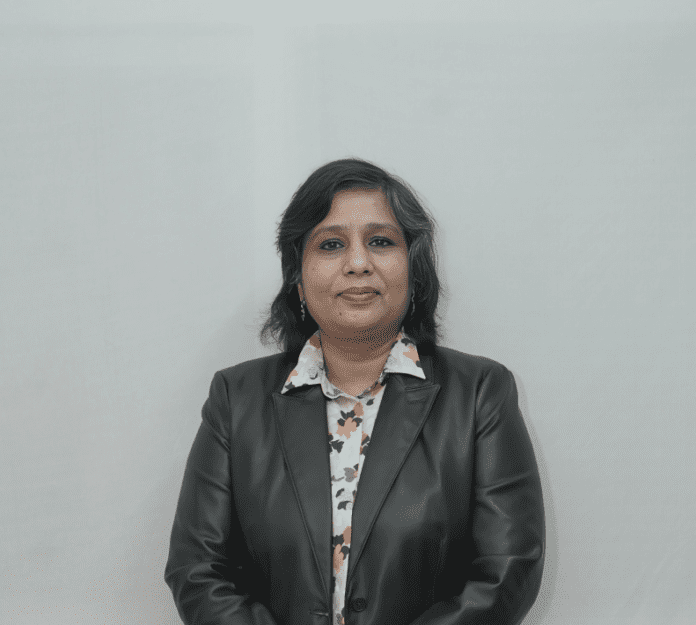
Introduction: For Shubra Mittal, Principal Planner and Founder Director of Arinem Consultancy Services Pvt Ltd, architecture has never been about form alone. It has always been about people. From growing up in a small town in western Uttar Pradesh to leading large-scale urban and infrastructure projects across India, her journey has been shaped by resilience, empathy, and an unshakeable belief that design must first serve the human experience. In this conversation, she reflects on beginnings, leadership, steel, sustainability, and the quiet responsibility architects carry in shaping everyday life.
“Empathy is a design tool women bring instinctively to the table.”
Early beginnings often define long journeys. What drew you to architecture and urban planning?
Growing up in a small town, inspiration did not come easily. The women I saw around me were largely homemakers or schoolteachers, and creative professions, especially architecture felt distant, almost invisible. Yet, my inclination towards creativity, balanced with a natural comfort for scientific reasoning, led me to architecture. At that time, architects were few, and women architects even fewer. Choosing this path was less about having role models and more about trusting an inner pull that refused to be ignored.
Starting Arinem Consultancy was a decisive step. What vision guided you?
Entrepreneurship, I believe, is in my genes. A nine-to-five role was never part of my imagination. Despite the challenges that come with running a practice, establishing my own firm felt inevitable. The vision was simple yet uncompromising, to design freely, without diluting intent, and to build a practice where design integrity would never be negotiated.
Your work in urban planning often speaks of people before projects. How did that philosophy evolve?
When I began working on public infrastructure, I noticed a troubling pattern. Spaces were either monumental, overwhelming and alienating, or executed casually, without regard for the end user. What was missing was the human scale. I rarely saw empathy reflected in spaces meant to serve thousands, sometimes lakhs, every day.
That absence shaped my philosophy. I began with one clear idea: humanising spaces through design. This principle became the core value system of our practice, guiding every project, regardless of scale.
“Steel enables us to build lighter, faster, and more responsive cities.”
Sustainability is now central to design conversations. How do you interpret it?
For me, sustainability is not a separate agenda, it is an extension of human-centric design. When user comfort and optimal resource use become priorities, sustainability follows naturally. If a public space cannot function without artificial lighting or air conditioning, it is neither resource-efficient nor comfortable in the long run. True sustainability lies in designing spaces that work with climate, not against it.
Are there projects that deeply reflect your values as a designer?
Some of the most meaningful work we have done involves housing for economically weaker sections. Designing a one-bedroom unit with a kitchen within just 33 sq m for families of four or five is among the toughest architectural challenges. These users are often the most overlooked. If thoughtful planning can offer them light, ventilation, and dignity within constrained spaces, then architecture truly serves its purpose. That, to me, is a meaningful contribution.
How do you see steel shaping contemporary urban infrastructure?
Steel has long been part of construction, but its relevance today is far more pronounced. It is lighter, faster to construct, and occupies less space than conventional RCC systems. As land becomes scarce and efficiency becomes essential, steel enables us to build lighter, more adaptable structures. In many ways, it is becoming indispensable to modern urban development.
Can you share an instance where steel transformed a project outcome?
In projects requiring large, uninterrupted spans, particularly in industrial facilities, steel becomes a true enabler. A recent industrial project demanded extensive clear spans to accommodate machinery layouts, and steel played a critical role in achieving those requirements efficiently. In such cases, it is not just a material choice; it is a design solution.
Your journey has not been without challenges. How have they shaped you?
Being a woman, a first-generation architect, and practising out of a Tier-2 city like Lucknow came with layered challenges. My abilities were often scrutinised more intensely by clients and teams alike. Balancing professional ambition with motherhood in a system that had few precedents required immense mental strength.
There was constant judgement, persistent guilt, and an unending need to prove oneself. Yet, these experiences shaped my resilience. They gave me empathy, patience, and clarity about priorities, qualities that support both my practice and my life as a mother to two daughters.
Do you believe women bring a distinct perspective to architecture and planning?
Anyone whose voice has traditionally been marginalised brings value when given agency. As women, we experience public spaces differently, often with a heightened awareness of safety, accessibility, and inclusivity. Whether it is a mother looking for a feeding room or a young woman navigating a street after dark, these lived experiences shape design sensitivity. Empathy, compassion, and inclusivity are strengths women naturally bring to the design table.
“Humanising spaces through design is not a philosophy, it is a responsibility.”
How do you lead multidisciplinary teams on complex projects?
Clarity is the foundation. Defining scope matrices and responsibilities early allows parallel workflows to function smoothly. As a design lead, guidance is important, but trust is essential. Constant supervision erodes confidence. I prefer to provide direction and allow teams to develop solutions through their own processes. People perform best when trusted.
What role has mentorship played in your journey?
Architecture is learnt on site, not just in classrooms. Mentorship in our field is often collective rather than one-on-one. Early in my career, working alongside my husband and partner proved formative. Through him, I learnt the importance of time management and delegation. These skills are as critical as design ability in sustaining a practice.
How do you balance creativity with technical rigour in infrastructure projects?
With experience, technical problem-solving becomes intuitive. Each challenge is unique, but years of practice build an internal toolkit. Comfort with technical complexity actually creates space for creativity. That said, it is always a tightrope walk, especially when stakeholders prioritise technique over art. Holding on to design intent requires patience and conviction.
Beyond work, what fuels your creativity?
Most architects are artists at heart. For me, performing arts have been a lifelong anchor. I trained in Hindustani classical music, have performed professionally, explored theatre, and am currently learning Kathak. Music centres me. Stagecraft has also strengthened my confidence as a presenter and communicator, skills that subtly inform my professional life.
If you had to define success in one sentence?
Success is not measured by awards, but by the quiet comfort someone feels, even briefly, because of a thoughtful design decision made at the drawing table.
What legacy do you hope your work leaves behind?
I hope to be remembered for the human quality of my work, the balance between comfort and aesthetics. Much like nature, where complex systems appear effortless, I wish my infrastructure projects to blend so seamlessly into everyday life that their complexity becomes invisible with time.