

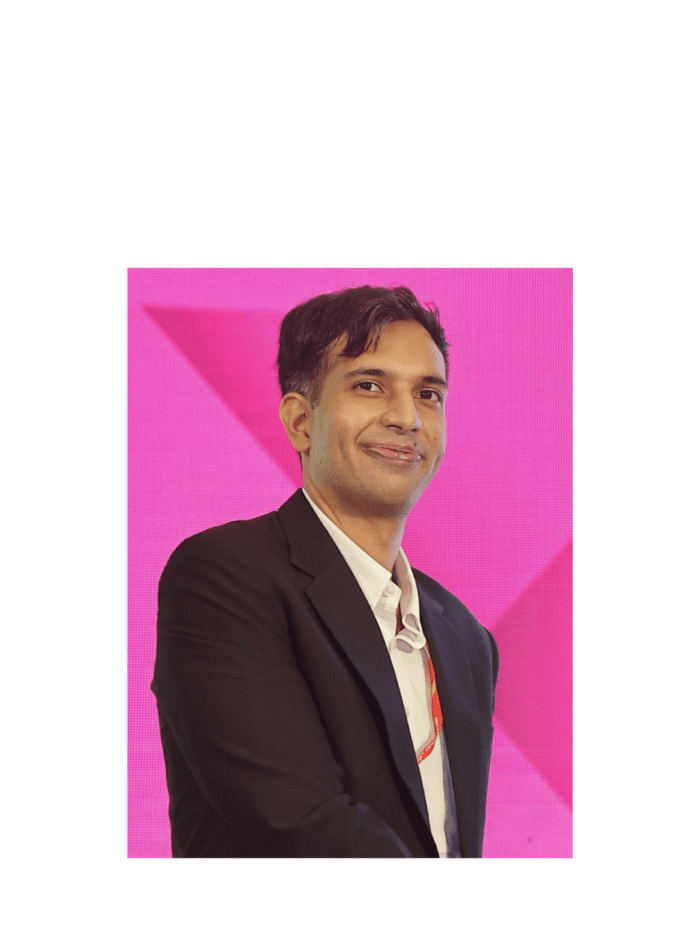
Intro: As Director of Mahimtura Consultants Pvt Ltd, DHRUVA MAHIMTURA represents the next generation of Indian structural engineering leadership, one shaped by lineage, sharpened by global exposure, and grounded in the realities of India’s fast-evolving construction environment. His decade-long journey reflects a rare blend of ambition and humility: drawing from the legacy of a family-run consultancy while pushing its technical vision into new territories.
In this candid conversation, Dhruva speaks about the spark that drew him to engineering, the rigour of consulting in India, the growing relevance of steel, and the responsibility of translating architectural ambition into practical, economical, and future-ready structures.
ENGINEER’S SNAPSHOT:
My College: UCLA; Imperial College London
Total Experience: 11 years
Biggest Influences:
- Sailesh Mahimtura (Father)
- Hiten Mahimtura (Uncle)
Mantra: Nothing is impossible
Wants To Be Remembered: As an innovative engineer
Current Steel Projects: Commercial Towers, Bank Offices in Mumbai
“Structural engineering was never a fallback; it was always where I belonged.” — Dhruva Mahimtura, Director, Mahimtura Consultants
What sparked your passion for engineering, and why structural consulting?
I grew up in a family of civil engineers who were deeply involved with Mahimtura Consultants, a firm founded by my grandfather and carried forward by my father and uncle. Being surrounded by drawings, site visits, and the energy of problem-solving made engineering feel natural to me.
From a young age, I knew I wanted to become a structural engineer. Studying the subject only strengthened that conviction. I genuinely enjoy the technical depth of the field. The logic, the precision, the ability to bring vision into reality.
What are the biggest challenges structural consultants face today?
Time. Timelines are tighter than ever, and expectations continue to rise. Structural engineering relies on coordination with architects, MEP teams, and contractors, and when clients don’t fully understand what it takes to achieve that alignment, schedules become even more compressed.
Ideally, more time should be devoted to planning. Many construction issues could be mitigated right at the design stage. But the reality is that most projects begin with aggressive delivery expectations. It is our responsibility, regardless, to design structures that are efficient, reliable, and economical within the constraints we are given.
“Speed is becoming a design driver, and steel will play a defining role in that shift.”
How do you see steel evolving in India’s construction landscape?
The potential is significant. In the West, labour is expensive, so using steel, which reduces labour hours, is the obvious choice. In India, the equation is different, but shifting. With redevelopment becoming central to cities like Mumbai, the value of speed cannot be overstated. Steel can get residents back into their homes faster and reduce the on-site impact of construction.
Commercial buildings already rely heavily on steel; I believe the real milestone will be when steel becomes a serious contender in residential projects too.
How do you balance architectural intent with constructability and cost?
Architects are the visionaries — the conceptual origin of the project. Our responsibility is to honour that vision while ensuring the structure is safe, practical, and buildable.
Cost is always part of the equation. The best outcomes happen when the architect, client, and consultant work together from day one. Early alignment builds trust, avoids rework, and leads to solutions that are elegant, efficient, and realistic.
“Nothing is impossible — that’s the mantra I carry to every project.”
What limits steel adoption in India compared to Western markets?
Cost remains the primary factor. Steel is inherently more expensive than RCC, so it becomes the preferred choice only when time is the critical driver. In markets where labour is costly, steel provides immediate savings — but that’s not the case in India yet.
However, when timelines are tight, steel becomes indispensable. As consultants, we should encourage clients to see steel not just as a material but as a strategic choice, one that can redefine efficiency and precision.

Why It Matters:
Dhruva Mahimtura represents a new wave of structural engineers redefining India’s built future. His perspective highlights how the country’s construction landscape is shifting toward faster timelines, tighter sites, smarter coordination, and materials like steel that offer both speed and precision. His story reinforces a vital message: as India densifies and redevelopment becomes the norm, structural design will need not just expertise but agility, foresight, and a willingness to innovate beyond convention.