

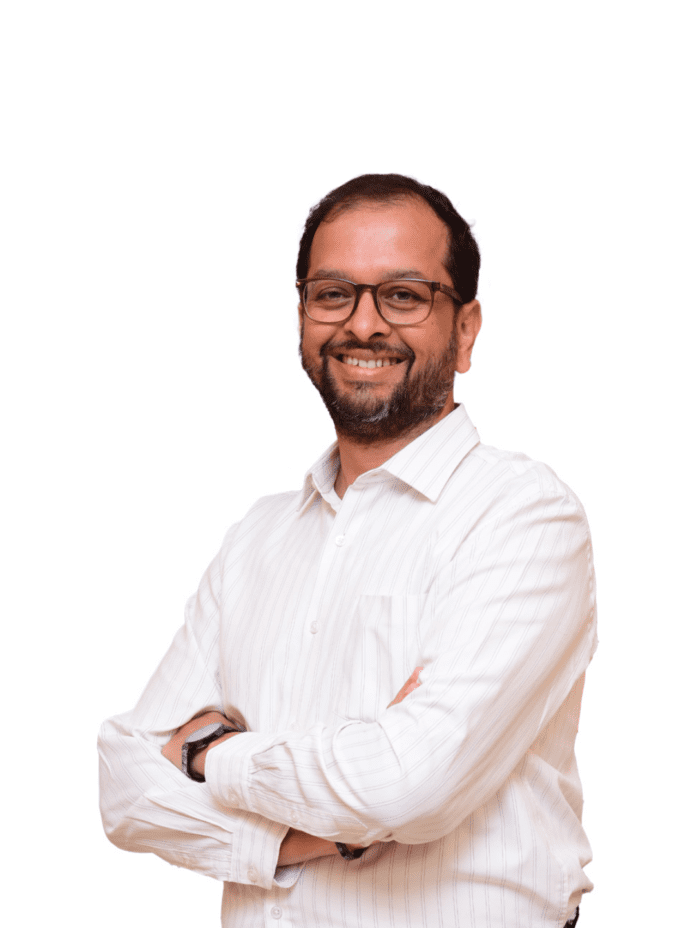
Introduction: YOGESH JOG, Design & Delivery Leader at CannonDesign, reflects on how the firm’s global design intelligence converges with India’s lived realities. In this conversation, he unpacks the shift from architect to orchestrator, the mechanics of leading a 65+ member design studio, and the nuanced balancing act between international standards and local expectations, particularly in healthcare, education, and science environments. His approach is rooted in collaboration, clarity, and thoughtful planning, where technology becomes an enabler and communication a defining design tool.
From architect to orchestrator, how has this shift shaped your leadership?
It has been a demanding but necessary transition. When you are used to being hands-on, stepping back to see the larger arc of the project, and guiding people instead of doing everything yourself is not easy. Over the past eight or nine years, I have learnt to mentor without micromanaging and to trust the team’s intelligence. Young professionals today are incredibly capable. With clear direction and the right digital tools, they navigate complexity with confidence. I now see my role as shaping the environment, not merely the output, building the conditions where people think clearly, collaborate openly, and grow continuously.
Let me share a moment from our Net House project. A floating glass staircase rested lightly on steel brackets. Initially, the treads tilted slightly underfoot. We explored remedies like mockups, added clamps, but eventually, the clients chose to retain the original design. “We have grown fond of the slight bounce,” they told us. That tactile, almost human response, it could only have been achieved with steel. And with clients sensitive enough to embrace that gentle resilience.
With over 65 designers, how do you ensure individual creativity thrives within a unified vision?
Unity begins with purpose. CannonDesign’s human-centred design philosophy acts as our shared compass. Once the team aligns with that vision, coherence happens naturally. Weekly open sessions create space for honest dialogue. Hybrid work has made these even more crucial, they help maintain cohesion in a dispersed studio. Leadership in Mumbai is shared, not centralised; this ensures that recognition, responsibility, and decision-making are evenly distributed. We also invite US designers to share approaches and design thinking. These cross-regional exchanges deepen understanding and strengthen our collective design vocabulary.
“My role today is to shape the environment, not just the drawings.”
You advocate for world-class public buildings in India. How do you balance global standards with local realities?
That dual lens is our biggest strength. We work on global projects every day, yet our instincts remain deeply local. Everyone on the team understands Indian construction logic, budgets, and cultural expectations. For instance, Indian hospitals are community-oriented spaces. A lobby that feels adequate in the US cannot handle the multi-generational flow of Indian visitors. These cultural dynamics must inform planning. My entire 28-year career has unfolded in India, but our exposure to global benchmarks ensures we bridge both worlds seamlessly, designing with global precision and local empathy.
A project where global standards met local constraints without compromise?
Two stand out: the Tata Medical Centre in Kolkata and a specialised vascular hospital in Hyderabad. In Hyderabad, structural constraints made inboard toilet shafts unfeasible. Instead of diluting the design, we developed external shafts that maintained clarity, efficiency, and flow. Corridor geometries and circulation paths were refined with equal rigour.
At Tata Medical Centre, sustainability and cultural expression guided the design wherein sandstone, granite, and selective curtain walling created a dialogue between local materials and international sensibilities. Local availability and long-term maintenance were central to every decision.
How do you keep your team future-ready?
We take continuing education seriously. LEED and CDT certifications are supported by the firm. Public-speaking sessions help team members articulate design intent clearly which is essential when collaborating across time zones. Knowledge-sharing sessions with our US studios unpack design logic, construction techniques, and unique client responses. Comparing American and Indian construction practices helps deepen systems understanding, especially with respect to tolerances and detailing. These programmes build both confidence and clarity, the two essentials for any global design practice.
“Planning is permanent; materials can change. A good plan outlives every finish.”
How do you measure the impact of these learning initiatives?
The growth is visible. People ask better questions, which leads to better decisions. That alone elevates project quality. Communication skills have transformed dramatically. Team members who once hesitated to speak now lead discussions, coordinate with US teams effortlessly, and present with confidence. This shift has improved both the pace and precision of our deliverables. We focus not just on technical skill but on holistic development, nurturing architects who think deeply, speak clearly, and collaborate effectively.
How do you ensure seamless transition from concept to documentation to site?
Relentless communication. Technology can catch conflicts, but only conversations build shared understanding. We rely heavily on 3D coordination tools, advanced modelling platforms, and structured digital workflows. These minimise surprises on-site, reduce rework, and help maintain project timelines. But technology doesn’t replace people, asking the right questions at the right moment still makes the biggest difference.
What emerging skill should architects focus on over the next five years?
The profession is evolving too rapidly to name a single skill. What matters is a mindset of continuous learning. Adaptability is becoming a core competency. We encourage people to explore tools, research new methods, share discoveries, and integrate what works. Staying curious is the only sustainable strategy.
“India’s cultural patterns must inform global standards — that’s where meaningful design happens.”
How does CannonDesign address India’s budget-centric project landscape while maintaining quality?
Planning is where long-term value resides. Materials can evolve, but a poor plan is almost impossible to correct later. We encourage clients to prioritise international-standard planning, especially for life safety and user comfort. A well-designed layout creates functional, stress-free environments and significantly extends a building’s relevance, even as finishes or trends change over time.
Inside Yogesh Jog’s Design Playbook
|
Why It Matters:
In an era where India is rapidly expanding its healthcare, education, and science infrastructure, Yogesh Jog’s approach offers a compelling blueprint for the future. For the steel construction ecosystem, his insights underscore a growing shift: as India learns from global benchmarks and strengthens its design processes, steel will naturally become the backbone of faster, more efficient, and future-ready building systems.