

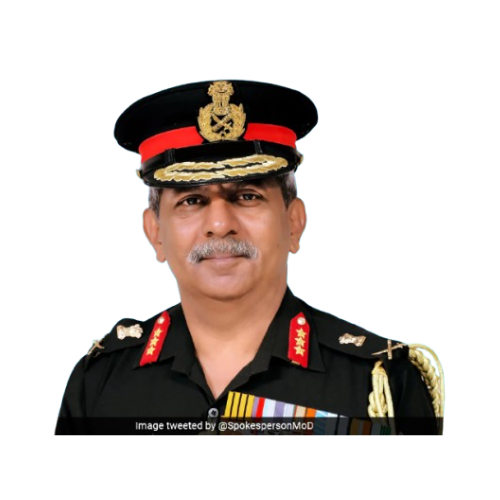
Introduction: In a nation defined by its vastness, complexity and strategic imperatives, few organisations carry a mandate as demanding or as consequential as the Border Roads Organisation. At its helm stands LT. GEN. RAGHU SRINIVASAN, Director General, Border Roads Organisation, an engineer-commander whose leadership blends operational clarity with technical depth. From steel-intensive modular bridges that restore vital connectivity within days, to climate-resilient structures that endure the harshest Himalayan winters, BRO’s work is both a logistical feat and an engineering study in precision.
In this exclusive conversation with SSMB, Lt. Gen. Srinivasan speaks with directness and purpose about the challenges of building at altitude, the evolving role of steel in strategic infrastructure, and the discipline required to deliver reliability where failure is never an option.
BRO has been instrumental in strengthening India’s strategic and infrastructure backbone, especially in high-altitude and remote terrain. How do you view its role in shaping modern infrastructure while balancing national security and regional development?
Both mandates are inherently complementary. In fact, we have never viewed them as competing priorities. Our foremost responsibility is to ensure that our armed forces have assured mobility to reach the border areas in the shortest possible time, regardless of season or terrain. Every road, tunnel, or bridge we construct is designed with this strategic requirement at its core.
However, what is equally evident, and repeatedly proven over the past 66 years is that the same infrastructure becomes the foundation for regional upliftment. Once connectivity reaches remote valleys and high-altitude regions, state agencies are able to deliver public services better, economic activity begins to take root, and communities previously isolated gain new opportunities.
What were once barren landscapes, accessible only by foot or mule trails, have evolved significantly through the combined impact of road access, state-led initiatives, and improved logistics. The dual-purpose nature of BRO’s work ensures that national security gains translate naturally into social and economic development. That is the unique strength of our mandate.
Given the extreme geographies and rapid deployment needs, what advantages does steel offer in terms of speed, adaptability and performance?
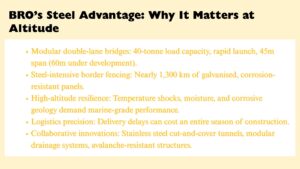
Steel remains indispensable to our work because it combines strength, modularity, and rapid deployability, the qualities essential in border environments. Our collaboration with GRSE, for instance, has enabled us to develop an upgraded and highly efficient version of the Bailey bridge. This double-lane modular bridge not only offers a 40-tonne load capacity but can also be launched quickly across 45-m spans.
The ability to assemble such structures rapidly is vital, particularly in the North and Northeast, where the working season is constrained by extreme winters and intense monsoons. We often have just seven months of practical construction time. In this window, speed becomes as critical as engineering rigour, and modular steel bridges provide exactly that advantage.
The success of these systems has led organisations like NHIDCL to explore similar solutions, and state governments, including those operating in left-wing extremism-affected districts of Chhattisgarh, are also adopting these bridges for the Ministry of Home Affairs. This demonstrates how steel bridges can be effectively replicated across diverse terrains.
Beyond bridges, steel plays a defining role in long-span fencing systems, such as the India-Myanmar border fence. Nearly 1,300 km of this fence utilise galvanised steel panels with specialised security features, illustrating both scale and criticality.
Given the harsh climates we operate in, be it large temperature variation, high moisture content, corrosive rock formations, the steel we use must perform reliably over decades. Durability, resilience, and quality are non-negotiable. Our operational environments demand nothing less.
“For us, reliability is the soul of construction. At the borders, there is no second attempt.”
BRO operates in some of the world’s most challenging terrains. What are the major engineering pressures you face in such environments?
The challenges are immense and many of them are unique to the regions we work in. Nowhere else in the country do you encounter such rapid temperature fluctuations, extreme cold, sustained moisture levels, and highly corrosive geological profiles all in the same operating belt. These conditions have a direct bearing on the performance of construction materials, especially steel, over time.
To manage this, our first priority is always the quality of the steel we procure. We source material only from primary manufacturers and rely heavily on suppliers with proven track records. Every batch undergoes strict testing protocols because once material is deployed in these zones, we must have complete confidence in its long-term behaviour.
Unlike urban projects, there is no scope for retrieval or remedial work. Logistics chains are long and often dependent on fragile weather windows. The terrain itself is unforgiving. In many ways, the environmental stress that our structures face is comparable only to marine conditions, perhaps even harsher in some stretches of the Himalayas.
Our teams must anticipate and engineer for these pressures right from the design stage, ensuring that survivability and performance remain uncompromised.
Are there engineering learnings or innovations that have emerged from these experiences especially in fabrication, erection or maintenance of steel structures?
Absolutely. The unique nature of our operating environment has pushed us toward solutions that prioritise modularity, lightweight performance, and long-term durability. For instance, in high mountain regions where we must channel large volumes of water safely, we construct numerous culverts and drainage structures. The need here is for steel components that are both easy to transport and robust enough to withstand the region’s intense freeze-thaw cycles.
This has led us to collaborate with major steel manufacturers who have responded with practical solutions tailored to our needs. Cut-and-cover tunnels are a strong example. These protective structures shield roads from avalanches, rockfalls, and slope failures by allowing debris to pass over the covered roadway without blocking it.
Our academic engagements have also yielded important learnings. IIT Guwahati studied the use of stainless steel for such structures in the Northeast, noting significant advantages in corrosion resistance and weight management. As we continue to operate in areas where conventional construction is difficult, we expect the steel industry to keep innovating. The more modular and transport-friendly these systems become, the more effectively we can respond to challenges on the ground.
“In BRO, we live where we build. That is what gives purpose to our work.”
Ensuring material quality and supply-chain reliability in remote regions is a critical challenge. How does BRO manage procurement, logistics and timelines?
Our approach is pragmatic and tightly coordinated. By the time material reaches us, much of the supply chain is already streamlined. We specify the technical requirements, and vendors deliver to predetermined logistic hubs, Leh being a prime example for the Ladakh sector.
From that point onward, our internal logistics system assumes full responsibility. Over the years, expanding road networks have enabled us to access more project sites directly, which has significantly improved material movement. However, what remains constant is our rigorous quality inspection regime. Materials are tested both at receipt points and at site, ensuring complete alignment with specifications. Timeliness is equally critical; if a delivery is delayed, we risk losing an entire working season. This is especially relevant in sectors where roads open only for a few months.
Our systems are designed to minimise such risks. Reliability in both supply and quality is essential to our operational model.
Does BRO plan to expand its use of high-performance steels or collaborate further with domestic manufacturers for customised solutions?
Yes, we see significant potential in this space. Our aim is to present clear problem statements to the steel industry and encourage them to develop targeted, performance-driven solutions that address the peculiar challenges of high-altitude and border infrastructure.
Our requirements may not be large in volume, but they are extremely specialised. The material must withstand intense environmental stress, arrive on time through difficult logistics chains, and deliver consistent performance over long periods. These demands are unique, and therefore the solutions must also be customised.
The positive aspect is that Indian manufacturers have already demonstrated responsiveness to our needs. As our projects expand in scope and complexity, we expect these collaborations to deepen, allowing us to integrate more high-performance steel into our infrastructure portfolio.
Infrastructure creation often requires balancing scale, strength and sustainability. Where, in your experience, does the soul of construction lie?
For me, the soul of construction lies in reliability. In our context, reliability supersedes scale or speed because our margin for error is effectively zero. The working window is short, and any delay, whether due to material failure or late delivery, can result in an entire season being lost.
Consider a scenario where we request material in April or May, receive it only in July, and then discover it does not meet specifications. By the time replacements arrive, the working season may already be closing. That is why we rely on trusted manufacturers with whom we have long-standing professional relationships. They understand our constraints and consistently deliver to our standards.
Reliability, therefore, becomes the most authentic measure of sustainability and strength for us.
Engineers often build places they never live in. What gives BRO its unique sense of purpose in building infrastructure at the nation’s remotest frontiers?
Our sense of purpose comes from the fact that we do live where we build. BRO personnel stay in these regions for prolonged periods, working through harsh winters, unpredictable weather, and terrain that poses daily challenges. We understand these areas intimately because we experience them firsthand.
This deep familiarity not only sharpens our engineering judgment but also strengthens our commitment. We are acutely aware that our work directly affects the mobility of our armed forces, the safety of our borders, and the well-being of the communities who inhabit these remote stretches. That connection gives meaning to every structure we build.
“Our challenges may be niche in scale, but they demand the highest quality.”
Steel embodies resilience and flexibility. Do you see a parallel in the people who serve in BRO?
Very much so. Working in these terrains demands physical strength, technical expertise, and a high degree of adaptability. The risks are constant with unpredictable weather, altitude challenges, difficult terrain, and our personnel often spend extended periods away from their families.
Despite these pressures, the workforce displays remarkable courage, discipline, and resilience. This spirit has defined BRO since its inception. In many ways, the analogy to steel, a material that endures stress, adapts to form, and provides strength is entirely fitting.
How is BRO enhancing its technical capabilities to meet modern construction demands?
Our training ecosystem is robust and continuous. We run programmes ranging from two-week modules to multi-month courses, tailored for officers, supervisors, engineers and our wider workforce. These programmes span the full career arc, ensuring that technical competence evolves with responsibility.
We also collaborate with premier institutions like mining schools for explosives training, road safety organisations in Noida, academic institutes that deliver on-site lectures, and other technical bodies that specialise in construction methodologies.
Our training school in Pune is a key hub where we integrate classroom knowledge with field experience. Topics cover construction engineering, contract management, material behaviour, use of explosives, and modern equipment handling.
Our guiding principle is simple: if a technology or technique is effective in major cities, we must be able to deploy it in border regions under far tougher conditions. This is especially true for steel components, drilling systems, and slope-stabilisation technologies. We use significant quantities of steel across our operations, and we work continuously with manufacturers to ensure new advancements are adopted seamlessly at the borders.
What message would you like to share with the Indian engineering, architectural and structural fraternity?
We stand today in a far more interconnected environment than ever before. The flow of knowledge, ideas and innovations is almost instantaneous. Unlike a decade or two ago, when institutions operated in silos, today there is vibrant collaboration among academia, research bodies like CSIR, and operational organisations such as ours.
We actively invite suggestions, conduct pilot projects, and share our findings across various platforms. This exchange of ideas strengthens our collective capability as a nation.
For India to build a future-ready infrastructure ecosystem that is robust, resilient, and aligned with its strategic needs, we must continue nurturing this collaborative spirit. It will be the cornerstone of our progress.
Editor’s Note:
Border infrastructure, more than a construction challenge, is a test of national will. BRO has long been at the forefront of this effort, translating engineering intent into lifelines across some of the harshest geographies on the planet. Lt. Gen. Raghu Srinivasan’s insights in this interview carry the unmistakable clarity of a commander and the technical acuity of an engineer. His perspective reinforces a simple truth: at India’s frontiers, precision is strategy. And steel being adaptable, resilient, and uncompromising, remains one of its most trusted tools.
Strategic Steel Structures in BRO Projects
- Modular bridges
- Cut-and-cover protective tunnels
- Border security fencing
- Slope-stabilisation systems
- High-altitude drainage assemblies